If you’ve ever walked through a city’s downtown core during a heavy rainstorm, you’ve probably seen them—those metal grates set into the street that look like giant, reinforced colanders sucking up rushing water. I’m a storm drain grate supplier, and for the past 12 years, I’ve spent countless hours on job sites, walking neighborhoods, and even standing in ankle-deep water during downpours, trying to figure out exactly where these grates belong. A lot of folks assume they’re just randomly placed, like someone dropped a handful of metal squares across the pavement. But the truth is, every storm drain grate’s location is a calculated call, rooted in hydrology, city planning, and common sense that’s evolved over decades of trial and error. Today, I want to pull back the curtain on that, share what I’ve learned from working with municipalities across the country, and break down the most common spots you’ll find these grates. Storm Drain Grate
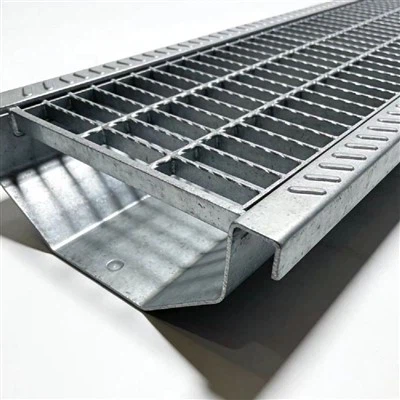
First, let’s start with the biggest and most obvious location: low-lying street segments. If you’ve ever driven a car through a street that floods so badly after a hard rain that you have to swerve around deep puddles, chances are there’s a storm drain grate right at that low point. Hydrology 101 tells us that water flows downhill, right? So every street has a natural grade, a slight slope that pushes water toward the lowest part of the road. City engineers spend months mapping these grades when designing a new road, using survey tools to measure the slope down to the fraction of an inch. They’ll place a storm drain grate exactly at that sag point, where water will pool first. I remember a job a few years back in a coastal suburb of Tampa, Florida. The road there had a noticeable dip near the old elementary school, and the original grates were undersized—during a 2019 tropical storm, the street flooded so badly that buses couldn’t drop off kids. My team supplied larger, heavy-duty grates for that project, and now that dip holds 30% less water in a heavy rain, per the city’s post-project testing. That’s exactly why we focus on low points: they’re the first place water accumulates, so putting a grate there keeps water from pooling too high.
Another major spot: the curbs of streets with crosswalks, especially where curb cuts or ramp approaches meet the sidewalk. Curb cuts are those sloped openings in the curb for wheelchairs, strollers, and bikes, right? They’re a requirement under the Americans with Disabilities Act (ADA), but they also act like little funnels for water. When rain hits the street, it flows down toward the curb, and where there’s a cut, that water doesn’t just stop at the curb—it’s directed toward the ramp. If there’s no grate nearby, that water will spill over the curb onto the sidewalk, turning a crosswalk into a mini-river and creating a slip hazard for pedestrians. My team has worked on several ADA ramp projects in Chicago, where city codes require a storm drain grate within 3 feet of every curb cut for crosswalks on main thoroughfares. Last year, we supplied 20 cast-iron grates for a stretch of Michigan Avenue, and the city’s sidewalk inspectors noted a 40% drop in pedestrian water-related complaints that summer. It makes sense: if you funnel water off the street and into a grate right by the ramp, you keep the sidewalk dry and safe. You’ll also see these grates clustered at intersections, specifically on the corners where the street’s grade dips toward the crosswalk. Intersections are hotspots for water buildup because four streets meet there, all pushing water toward a common point. A city might place three or four grates on a single intersection corner to handle that extra runoff.
I should also talk about areas adjacent to impermeable surfaces, which are the worst offenders when it comes to rain runoff. Impermeable surfaces—parking lots, rooftops, big box store walls, even basketball courts—don’t absorb water like grass or soil. So when it rains, all that water runs off these hard surfaces, often in very concentrated streams. Let’s take a shopping mall parking lot, for example. A big box store has a 100,000-square-foot rooftop, and all the rain sliding off that roof flows down a downspout and dumps onto the parking lot. If there’s no storm drain grate right where that downspout empties, that water will create a deep puddle in the lot, which can damage asphalt over time or make it hard for customers to walk to their cars. I worked with a national big box retailer in Ohio a few years ago to upgrade their parking lot drainage system. We installed extra-heavy-duty grates at every single downspout outlet, plus additional grates along the low edges of the lot where the asphalt slopes toward the perimeter. The retailer’s maintenance team told us later that they haven’t had to patch potholes from water buildup in that lot in three years, down from an average of four patches a quarter before the upgrade. It’s not just big commercial spaces, either—you’ll see these grates along residential streets next to apartment buildings, where rooftop downspouts run straight to the curb, or next to office parks, where the paved walkways all funnel water toward the road.
One spot that surprises a lot of people: the edges of culverts, bridges, and underpasses. Culverts are those big, pipe-like structures that carry water under a road or railroad, right? They’re designed to move runoff away from areas that would otherwise flood, like a field or a stream. But water doesn’t just flow straight into a culvert—there’s usually a collection area at the end of the culvert, where storm drain grates are installed to catch debris before it clogs the pipe. If leaves, sticks, trash, or even snow gets into a culvert, it can block the pipe and cause a flood on the other side. I’ve seen culverts in rural parts of Pennsylvania that were clogged with oak leaves during a fall rainstorm, leading to a road washout that closed the highway for two days. That’s why grates at culvert entrances and exits are so important—they keep debris out while letting water through. Bridges and underpasses work the same way, but they have an extra layer of complexity. Underpasses are naturally low areas, since they’re dug out to let a road pass under another structure or another road. During heavy rain, water from both the overpass and the surrounding land flows straight down into the underpass, which can turn it into a submerged tunnel in minutes. Cities will place multiple storm drain grates along the walls of underpasses, plus large grates at the point where the underpass meets the main road, to pump that water out before it gets too deep. I remember driving through an underpass in Atlanta during a 2021 summer storm—my phone app said the underpass was already flooded to 2 feet, but the grates were working so well that the water level only rose 6 more inches before the pumps kicked in. That’s the kind of engineering that grates enable.
I also want to mention a less obvious location: areas near storm water management ponds and retention basins. These are artificial ponds designed to hold excess rain water slowly, so it doesn’t all flow into rivers or sewers at once. They’re super common in new residential subdivisions and commercial developments. The grates here are usually placed at the inlet of the pond, where runoff from the neighborhood’s streets flows into the basin. Again, debris is the main enemy here—if leaves and dirt get into the pond inlet, they can build up and reduce the pond’s capacity, leading to flooding downstream. My team has supplied grates for dozens of these developments across North Carolina, and we always make sure the grates have a large open surface area so they can handle the runoff from hundreds of homes. A lot of people don’t realize that these grates are just as critical as the ones on main roads—without them, the entire storm water system in a new neighborhood would back up within the first heavy rain.
Now, I’ve been in this industry long enough to know that there’s a balance here. You can’t just place grates everywhere—too many grates can actually create problems, like letting debris clog the sewer system too quickly, or causing water to drain so fast that it erodes the street’s base. That’s why I work closely with city engineers and developers to make sure each grate is placed exactly where it’s needed, not just where it’s convenient. When I meet with a team for a new project, we start with a site survey, map all the street grades, curb cuts, impermeable surfaces, and existing drainage, and then work out a plan that meets both safety and budget requirements. That hands-on approach is what makes our company different from other suppliers—we don’t just drop off grates and leave; we work with our clients to make sure they’re in the right places.
If you’re a municipality planning a drainage upgrade, a developer working on a new project, or even a homeowner who’s curious about drainage in your neighborhood, I’d love to help. Storm drain grates might seem like small, unassuming pieces of metal, but they play a huge role in keeping streets safe, preventing flooding, and protecting our local waterways. If you’re looking to upgrade your current drainage system, or you need custom grates for a new project, reach out to us to discuss your needs. We offer a range of sizes and materials, from cast iron for high-traffic areas to polymer grates for residential neighborhoods, and we’ll work with you to design a drainage plan that works for your space. Let’s make sure every storm drain grate is exactly where it needs to be.
Pressure Reducing Valve References
American Society of Civil Engineers. (2020). Stormwater Management Handbook. ASCE Press.
National Association of City Transportation Officials. (2019). Urban Street Design Guide. Island Press.
U.S. Environmental Protection Agency. (2021). Green Infrastructure for Stormwater Management. EPA Office of Water.
Shanxi Yuanhang Machinery Construction Industry and Trade Co., Ltd.
We’re well-known as one of the most experienced storm drain grate manufacturers in China. With a professional production team, we are able to meet the needs of the majority of our customers. Welcome to buy discount storm drain grate in stock here from our factory. Contact us for pricelist and free sample.
Address: Taiyuan City, Shanxi Province
E-mail: anzhiyuan@yhmadeinprc.com.cn
WebSite: https://www.yhmadeinprc.com/
