If you’ve ever visited a lightweight concrete production facility, you’ve probably seen the AAC turning cutting system in action—its large rotating drums, precise cutting blades, and automated feeders moving aerated concrete blocks through the curing process. As a supplier who’s worked alongside plant operators for over a decade, I’ve seen firsthand how these systems streamline production, but I’ve also witnessed the consequences when basic safety protocols fall by the wayside. AAC turning cutting systems are not just heavy machinery; they’re complex tools with sharp edges, rotating components, and pressurized materials that can cause serious injury if handled improperly. This post breaks down the non-negotiable safety measures every plant should follow, rooted in on-the-job experience and industry best practices I’ve honed with customers across three continents. AAC Turning Cutting System
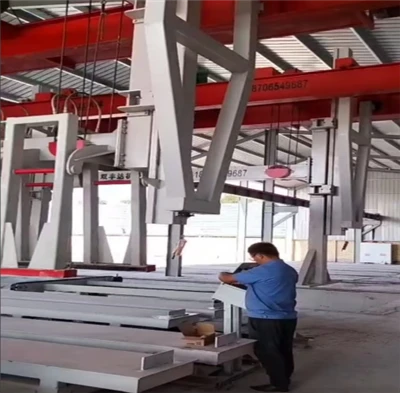
First, let’s clarify what makes the AAC turning cutting system unique, because its safety risks differ from other manufacturing equipment. Unlike standard saws or conveyor systems, these machines handle pre-cured aerated concrete, which is porous and crumbly, but the cutting heads and rotating mandrels move at high speeds to slice large blocks into custom dimensions. What many new plant operators don’t realize is that the system’s safety hazards aren’t just obvious—they’re often hidden. For example, the slurry used to bond AAC blocks before cutting can harden on blade surfaces, creating a sharp, uneven edge that can catch a loose glove or sleeve, while the rotating mandrels that hold blocks in place have tight gaps that can pull in long hair, jewelry, or clothing if someone gets too close. Early in my career, I worked with a plant in Southeast Asia where a 22-year-old operator lost a finger because he reached to adjust a hardened slurry buildup on a cutting blade without locking out the machine. That incident stuck with me, and it’s why I now emphasize lockout-tagout (LOTO) protocols as the foundation of every safety program for these systems.
Lockout-tagout is not just a formality—it’s the single most effective way to prevent accidents during maintenance or adjustment, which are the times when most AAC cutting injuries occur. The Occupational Safety and Health Administration (OSHA) reports that 34% of manufacturing machinery accidents happen during servicing, and AAC turning cutting systems are no exception. Every time an operator needs to clear a jam, adjust a blade, or replace a mandrel, they must follow strict LOTO steps: turn off the power to the system at the main disconnect, place a personal lock and tag on the disconnect to prevent others from turning it back on, and verify that the machine is completely immobilized before starting work. Too often, I’ve seen operators skip this step because “the machine always shuts off when I press the stop button,” but AAC systems have large flywheels that can spin for up to 10 seconds after power is cut, and a misaligned sensor can trigger an unexpected restart. Last year, a customer in the Middle East told me about a near-miss where an operator was clearing a block jam when the system restarted due to a faulty sensor; because he’d skipped LOTO, he was able to duck out of the way, but the incident led the plant to update its protocols to require a secondary physical lock on the mandrels during maintenance.
Beyond LOTO, guarding is a critical measure that many plants cut corners on to maximize production time. AAC turning cutting systems come with fixed guards for the cutting heads, rotating mandrels, and feed conveyors, but these guards are often removed or modified to make it easier to clear jams quickly. This is a dangerous tradeoff: the gap between a cutting blade and its guard is only designed to keep hands and clothing out, and without the guard, a loose sleeve can get caught and pull an operator into the blade. As a supplier, we design our systems with adjustable guards that can be partially opened for jam clearance without removing them entirely, but many customers opt for cheaper, fixed guards that can’t be modified. I recommend that plant operators never remove a guard entirely, and if a guard is damaged, replace it immediately—even if that means pausing production temporarily. Additionally, point-of-operation guards for the block loading area, where workers lift heavy AAC blocks onto the feed conveyor, should be in place to prevent pinched fingers between the block and the mandrel. We’ve had customers report that adding light curtains to this loading area reduced minor pinch accidents by 70% within six months, a small investment that pays off in safety and downtime.
Another often overlooked safety risk with AAC turning cutting systems is dust and slurry exposure. AAC production generates two types of hazardous materials: silica dust from the cured concrete and wet cement slurry from the pre-cut bonding process. Silica dust is a known carcinogen, and repeated exposure can lead to silicosis, a irreversible lung disease, while wet slurry can cause skin irritation and chemical burns if it comes into contact with unprotected skin. Operators working near the cutting heads are the most at risk, because the high-speed blades kick up silica dust into the air, and the slurry can splatter when blocks are cut. The first line of defense here is ventilation: plants should install local exhaust ventilation (LEV) systems directly above the cutting area to capture dust and slurry before it spreads. Many of our customers in Europe have switched to dust extraction systems that fit seamlessly with our AAC turning cutting systems, which capture 95% of airborne silica dust, well above OSHA’s 8-hour exposure limit of 50 micrograms per cubic meter. For workers who are on the floor near the machine, personal protective equipment (PPE) is non-negotiable: N95 respirators, safety goggles, chemical-resistant gloves, and non-slip steel-toe boots. I’ve seen operators skip respirators because “they make it hard to breathe while working,” but even short-term exposure to high silica levels can cause long-term damage, so regular PPE training and fit tests are required for all workers interacting with the system.
Training is where many plants fall short, especially for temporary workers who are hired to cover peak production periods. AAC turning cutting systems require specialized knowledge to operate safely, and generic manufacturing training is not enough. For example, operators need to know how to adjust the cutting speed based on the density of the AAC block—too fast, and the block can shatter and send debris flying; too slow, and the blade can overheat and break. They also need to recognize warning signs: unusual vibrations from the mandrels, uneven cuts, or a sudden increase in dust, all of which can indicate a malfunction that needs immediate attention. As a supplier, we provide hands-on training for all operators and supervisors when a system is installed, but we also encourage customers to hold monthly refreshers that focus on specific safety scenarios. Last year, a customer in Australia hosted a mock jam incident during a training session, where operators practiced LOTO and blade adjustment steps without power to the machine; the session highlighted gaps in their process, like operators forgetting to test the mandrel lock before starting work, which they fixed before a real incident occurred. I also recommend that plants assign a dedicated safety officer for the AAC turning cutting system, someone who is responsible for daily inspections, training updates, and reporting hazards—this is a role that many small plants overlook, but it’s critical for accountability.
Pre-use inspections are a simple but effective measure to prevent breakdowns that can lead to accidents. Before each shift, operators should conduct a 10-minute walkthrough of the AAC turning cutting system to check for worn parts, loose bolts, or damaged sensors. For example, a worn blade can break mid-cut, sending sharp fragments flying across the plant, while a loose mandrel can cause a block to shift and collide with the cutting head, damaging the machine and injuring nearby workers. I’ve seen a customer in Brazil avoid a catastrophic breakdown by checking a blade before a shift: the operator noticed a tiny crack in the cutting edge, which would have shattered within the first hour of operation, and replaced it before starting. The inspection checklist should also include checking emergency stop buttons, which are positioned at key points around the system—if a button is broken or hidden by equipment, it’s useless in an emergency. I recommend that plants test emergency stops weekly to ensure they shut down the entire system immediately, and that all emergency buttons are clearly marked and not blocked by any materials or machinery.
Finally, housekeeping is a safety measure that is often taken for granted, but it’s essential for AAC turning cutting systems. A build-up of AAC dust, slurry, and small debris on the floor around the machine can create slip hazards, and debris can get stuck in the rotating parts, causing jams. Many plants sweep the area around the system once a day, but I recommend that operators keep the area clear during shifts, especially when clearing jams or loading blocks. In one incident I witnessed, a plant in India had a block of AAC fall off the feed conveyor and roll into the path of the rotating mandrels; an operator slipped on a puddle of slurry while trying to move it, and his arm came into contact with a partially exposed blade, causing a serious injury. Regular cleaning not only prevents slips and trips but also reduces the risk of dust explosions—while AAC dust is not highly explosive, large accumulations in enclosed spaces can ignite if exposed to a spark from the system’s electrical components.
Every safety measure I’ve outlined here comes from real incidents, near-misses, and the lessons I’ve learned from working with AAC turning cutting systems for years. Safety isn’t just a set of rules; it’s a culture that requires every worker to look out for each other, report hazards immediately, and never cut corners to save time. If you’re working with an AAC turning cutting system or considering installing one, the right safety protocols will not only protect your workers but also reduce downtime and improve production efficiency.
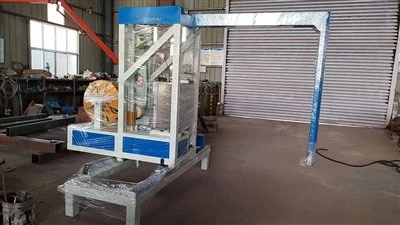
If you’re ready to explore AAC turning cutting system solutions tailored to your production needs, connect with our team to discuss safety upgrades, training resources, and equipment that aligns with global manufacturing standards. We’re here to help you build a safer, more productive operation without compromising on quality.
Aerated Concrete Block Packaging Line References
Occupational Safety and Health Administration. (2022). Lockout/Tagout: Standard 29 CFR 1910.147.
American Concrete Institute. (2021). Safety Guidelines for Lightweight Concrete Production Machinery.
International Association of Industrial Safety. (2023). Hazard Mitigation for Turning Cutting Systems in AAC Manufacturing.
Qingzhou Shuangfengda Machinery Engineering Co., Ltd.
As one of the most professional AAC turning cutting system manufacturers and suppliers in China, we’re featured by quality products and good price. Please rest assured to buy durable AAC turning cutting system for sale here from our factory. Customized orders are welcome.
Address: Gaojiazhuang Village, Gaoliu Town, Qingzhou City, Shandong Province
E-mail: lenhond@163.com
WebSite: https://www.sfdmachinery.com/
