If you’ve ever stepped into a concrete batching plant, a quality control lab at a construction materials company, or even a university civil engineering lab, you’ve probably seen a cement flexural strength testing instrument sitting on a workbench—often looking like a sturdy, unassuming piece of metal with a few dials and a pair of loading arms. As a supplier of these instruments, I get asked about them almost every week: “How do they actually work? Is there more to it than just pressing down on a sample?” The short answer is yes, and the details matter not just for lab techs running tests, but for every builder, architect, and project manager counting on concrete to hold up a bridge, a skyscraper, or a residential foundation. Let’s break this down, in plain terms, from how the instrument is built to how it delivers the data that shapes the structures around us. Cement Testing Instrument
First, let’s start with why flexural strength matters, because that’s the root of why we use these instruments at all. Cement itself is a binding agent; when mixed with water, aggregate, and additives, it hardens into concrete, which is strong in compression (squeezing forces) but much weaker in tension or bending forces. When a concrete beam or slab sits between two supports, like a bridge deck on two piers, the middle of the beam pulls downward, creating tensile stress that can cause cracks or breakage. Flexural strength, also called modulus of rupture, measures how much that concrete can bend before it fractures. For cement, this test is standardized globally—you can’t just improvise a setup in a lab, because consistent, comparable results are non-negotiable for industry codes (like ASTM C348, the standard for testing flexural strength of hydraulic cement mortars, which is the gold standard here). That’s why a quality cement flexural strength testing instrument isn’t just a machine—it’s a precision tool that sticks exactly to those standards.
Now, let’s talk about the core components. Every instrument I supply has four key parts, each designed to eliminate human error and deliver reliable, repeatable results. First is the loading frame: this is the rigid metal base that holds the test sample and the loading mechanism above. Made from heavy-gauge steel, it has to be stiff enough that it doesn’t bend or shift during a test—even when applying thousands of pounds of force. If the frame flexes at all, the measurement will be off, which is why I only source frames from manufacturers that calibrate them against NIST-traceable standards before they leave the factory. Second is the support apparatus: two curved, cylindrical rollers, 100 millimeters apart (for standard samples), set into the base of the frame. These rollers cradle the cement mortar beam we’re testing, so the beam rests evenly without slipping or rocking. Third is the loading assembly: a single loading roller, centered exactly between the two supports, that moves straight downward to apply force to the top of the beam. No tilting, no side-to-side movement—just a straight, vertical load, per ASTM standards. Fourth is the load measurement system: this can be a hydraulic load cell or a electronic force sensor connected to a digital display, which tracks the exact amount of force being applied to the beam in real time.
Let’s walk through a test step-by-step, because that’s where the instrument’s design comes to life. First, you prepare a standard cement mortar sample: a beam that’s 40mm x 40mm x 160mm. That size isn’t random—it’s been standardized for decades because it balances test consistency with ease of handling. You let the mortar cure for 28 days (the standard age for flexural strength testing, though some tests do shorter timelines for initial strength checks) in controlled conditions: 100% humidity, 23°C temperature, to ensure it hardens uniformly. When it’s time to test, you take the cured beam, wipe off any loose debris, and place it on the two support rollers. The support rollers can move slightly to account for small differences in beam dimensions, but the distance between them stays fixed at 100mm—critical because that span is part of the flexural strength calculation.
Next, you set up the instrument to apply load at a constant rate. This is another non-negotiable standard: the load must increase at 50 N per second, give or take 10%, until the beam breaks. Why that exact rate? If you load too fast, you’ll get a higher strength reading than the actual real-world performance of the concrete, because cement has a time-dependent strength property. If you load too slow, the beam might creep (slowly bend under constant force) and give a lower, inaccurate number. The instrument’s control system—either a digital microprocessor for modern models or a calibrated hydraulic valve for older manual units I still supply for small labs—monitors the load rate the entire time, adjusting the force to stay on target.
Now, the instrument’s job is to track exactly when the beam breaks, and how much force was applied at that moment. When the beam starts to bend, the load roller presses down evenly along the top center of the beam. As the tensile stress at the bottom of the beam builds, a small crack will form—usually at the point where the load is applied, or closer to one of the supports, depending on small inconsistencies in the sample. The load measurement system catches the exact peak force just before the beam fractures. Once the beam breaks, most instruments will automatically stop loading and display the flexural strength calculation right on the screen, no manual math needed.
Wait, how does the instrument go from peak force to flexural strength, exactly? Let me keep it simple, no overly complicated formulas. The formula for flexural strength of a beam loaded at the center is (3 * F * L) / (2 * b * d²), where F is the peak force at break, L is the span between the supports, b is the width of the beam, and d is the depth of the beam. The instrument is pre-programmed with the standard values for L, b, and d—since all our tests use the same 40mm x 40mm x 160mm beam and 100mm span—so when you input the peak force, it spits out the flexural strength in megapascals (MPa) or pounds per square inch (PSI), depending on your region. That’s why calibration is so important: if the load cell is off by even 100 Newtons, the final strength number will be off by several MPa, which could lead to a construction team overestimating or underestimating their concrete’s capacity.
A common question I get is: what’s the difference between a manual cement flexural strength testing instrument and a digital one? I supply both, and each has a clear use case. Manual units are lower-cost, simpler to operate, and perfect for small labs or field offices that don’t need high-volume testing. They use a hydraulic jack and a pressure gauge—you turn a hand pump to build force, watch the gauge, and record the peak load when the beam breaks. The downside is that there’s more room for human error: you have to manually adjust the load rate, read the gauge accurately, and calculate the strength yourself. Digital instruments, on the other hand, are more precise, automate most steps, store test data for traceability, and connect to lab software for report generation. They’re ideal for large production labs, concrete plants, or testing facilities that run hundreds of tests a month and need full documentation for regulatory compliance.
I’ve seen first-hand how these instruments’ design can make or break a test. A few years ago, I worked with a small construction testing lab that was getting inconsistent flexural strength readings, and they thought the cement itself was bad. When they brought their instrument to me for inspection, I noticed that the support rollers had worn down, creating an uneven span that was off by 2mm—enough to skew the calculation. After replacing the rollers and calibrating the load cell, their readings were consistent again. That’s a perfect example of how every part of the instrument, even small moving parts, matters for reliable results. Another client, a university civil engineering lab, upgraded to digital flexural strength testers last year, and now their graduate students can run three times as many tests in a day, with automatically logged data that meets their department’s research standards.
It’s also important to note that these instruments aren’t one-size-fits-all. While the ASTM standard governs the test for hydraulic cement, there are variations for different types of cement, like high-strength cement or masonry cement. Some instruments I supply have adjustable span lengths to accommodate different sample sizes, or load rate settings tailored to regional standards, like the European EN 196-1 standard, which uses the same sample size but a slightly different test procedure. That’s why when I work with a new customer, I don’t just sell them an instrument and walk away— I ask about their specific use case, how many tests they run, what standards they need to comply with, and even their lab’s space constraints, to make sure they get the right tool for their work.
At the end of the day, the cement flexural strength testing instrument is a behind-the-scenes workhorse. No one sees it driving a construction crew or pouring concrete, but every structural project that relies on cement uses data from these machines to make sure it’s safe. I’ve been a cement testing instrument supplier for over 12 years, and the thing I’m most proud of is that every instrument we supply isn’t just a piece of equipment—it’s a tool that helps deliver reliable, consistent results, so builders and engineers can focus on what they do best: building structures that last.
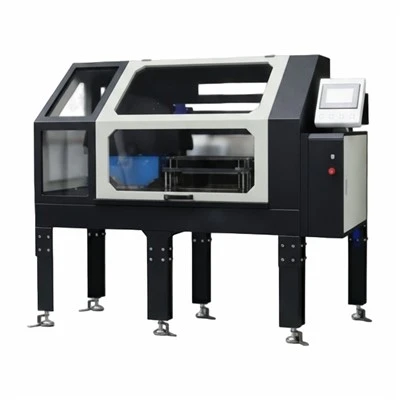
If you’re looking to upgrade your lab’s testing equipment, need to replace an outdated instrument, or just have questions about which flexural strength tester is right for your operation, feel free to reach out to discuss your specific needs in detail.
Compression Testing Machine References
ASTM International. Standard Test Method for Flexural Strength of Hydraulic-Cement Mortars, ASTM C348-21. ASTM International, 2021.
European Committee for Standardization. Methods of testing cement — Part 1: Determination of strength, EN 196-1:2019. European Committee for Standardization, 2019.
NIST. Calibration of Force Measuring Instruments for Static Loads. National Institute of Standards and Technology, 2020.
Hebei Wanluda Testing Instrument Equipment Co., Ltd.
As one of the most professional cement testing instrument manufacturers and suppliers in China, we have world-leading production equipment and strong manufacturing capabilities. Please rest assured to buy advanced cement testing instrument made in China here from our factory.
Address: Zhouguantun Village, Xian County, Cangzhou City, Hebei Province, P.R.China
E-mail: wldinstrument@163.com
WebSite: https://www.wldinstrument.com/
