What’s up, everyone! If you’ve ever stood in a stuffy warehouse, waited for a ventilation fan to kick in and actually move the air fast, you’ve probably crossed paths with a forward centrifugal fan. I’m from a forward centrifugal fans supplier, and I get asked all the time—“What makes these things different from the box fans or the regular centrifugal ones?” Today, we’re breaking down their flow characteristics, the stuff that makes them work so well for so many jobs, from industrial exhaust to HVAC systems. No stuffy engineering jargon, just real talk from someone who sells these things every single day. Let’s dive in. Forward Centrifugal Fans
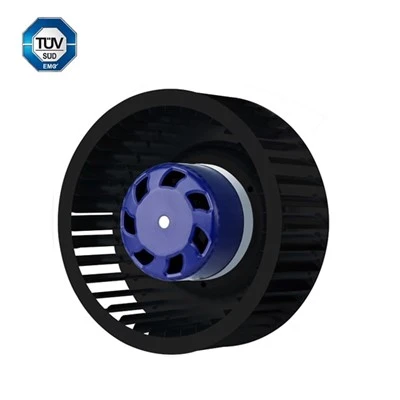
First off, let’s keep it simple: a forward centrifugal fan’s wheel (the big spinning part that moves air) has blades that curve forward, right toward the direction the wheel spins. That’s the main thing that sets them apart from backward-curved or radial fans, and it’s where all their flow quirks come from. When the wheel spins, it slaps air in front of the blades, pushing it outward. Unlike backward blades, which pull air more gently, forward blades get that air moving faster right at the fan. But here’s the catch—their flow curve is totally unique, which is key for anyone buying one.
Let’s start with pressure vs. flow rate, the most basic flow metric we care about. For most centrifugal fans, when you crank down the airflow (like closing a damper on the duct), the static pressure goes up a little, then levels off or drops. But forward centrifugal fans? Their pressure curve is steep, super steep. When airflow is really low (zero flow is called “shutoff head”), they put out way more static pressure than other fans the same size. That’s why our customers love them for systems that have a lot of duct resistance—like long runs of ductwork, filters, or other components that slow air down. If you have a system that’s tight on pressure, a forward centrifugal fan will punch through that resistance way better than a backward fan. But here’s the thing to watch out for: as flow increases, pressure drops fast. That means they’re not great for super high-flow, low-pressure jobs, like big warehouse ventilation where you need to move a ton of air with little push. We usually steer customers toward backward-curved fans for that, not forward.
Next, let’s talk about horsepower (HP) draw. This is a big one because no one wants a fan that blows their electricity bill through the roof. Forward centrifugal fans have a “horsepower peak” that happens at around 1.3 times their maximum flow rate. Wait, that’s different from other fans—most centrifugal fans hit their HP peak at shutoff, or at least way lower flow. So what does that mean for you? If you accidentally run a forward centrifugal fan beyond its maximum flow (like if you open all dampers way too much), the HP spikes hard. That can blow a motor, burn out wiring, or just waste a ton of power. I’ve seen it happen a few times early in my sales career—customer installs a fan, opens all the dampers, comes back the next day because the motor’s fried. Now we always warn customers: size the fan right, and don’t oversize the duct so much that you push the fan past its max flow. For systems that operate at or near their design flow, though, forward centrifugal fans are actually pretty efficient. Their peak efficiency is around 70-80%, which is solid for this type of fan, way better than old-style propeller fans.
Now, let’s get into how they handle flow unsteadiness. A lot of people don’t talk about this, but flow unsteadiness (like surging or rotating stall) is a real pain. Surging is when the flow through the fan pulses, right—air stops moving, then surges forward, makes a loud grunting noise, and can shake the whole duct system. Rotating stall is when a small portion of the fan blades stop working, creating a low-flow pocket that spins around the wheel, also noisy and bad for parts. Forward centrifugal fans are more prone to surging and rotating stall than other centrifugal types, especially when they’re operating at low flow rates. That’s the downside of that steep pressure curve. If you run them way below their design flow, you’ll get that surging. But here’s the good news: most of our customers don’t operate their fans way below design flow. For HVAC systems, industrial exhaust, or make-up air systems, the flow is pretty consistent, so they avoid the low-flow range where surging happens. We always map out the system’s flow requirements first, so we can tell customers if a forward fan is safe for their setup, or if they need a different type.
Another flow characteristic: inlet velocity distribution. When air comes into the fan, it needs to flow evenly over all the blades, right? If it’s lopsided—like more air coming in one side than the other—the fan won’t work as well, and it’ll wear out faster. Forward centrifugal fans are a little less fussy about inlet conditions than backward or radial fans. Wait, is that true? Yeah, from what we see. We’ve installed them in systems where the inlet duct has a couple of 90-degree elbows, no straightening vanes, and they still perform pretty well. Backward-curved fans, on the other hand, hate uneven inlet flow—they lose efficiency fast, or even vibrate. That’s a big win for forward centrifugal fans in tight spaces where you can’t add long straight inlet ducts or flow straighteners. We use them all the time in retrofits where you have to cram a fan into an old, cramped mechanical room.
Wait, let’s not forget about air density effects. These fans work a little differently in thin air, like at high altitudes. Since forward blades move air with more force at the wheel, they’re better at moving less dense air than other fans? No, wait, let’s get that right. If you’re at 5,000 feet above sea level, air is less dense, so the fan can’t move as much actual mass of air. But the pressure curve still holds—they’ll put out higher static pressure at the same flow than a fan of the same size at low altitude. That means if you’re installing a fan in Denver, for example, you can still use a forward centrifugal fan, you just have to size it a little bigger than you would at sea level. We calculate that all the time for mountain clients, no problem.
Now, let’s talk about real-world examples, because theory is fine, but actual jobs make it click. Last year, we sold a set of forward centrifugal fans to a commercial kitchen exhaust system. Kitchens need fans that can pull grease, smoke, and hot air out fast, and they have a lot of ductwork with filters, hoods, and dampers—lots of resistance. The forward fan’s steep pressure curve meant it could punch through all that grease buildup in the duct (which adds more resistance over time) without losing flow. That job’s been running for 10 months, no complaints. Another one: make-up air for a paint booth. Paint booths need consistent airflow to keep fumes from escaping, and the duct runs from the outside of the building to the booth, about 50 feet long. The forward fan’s ability to handle uneven inlet flow (since the make-up air duct comes from a distant part of the building with a couple of elbows) meant we didn’t have to add flow straighteners, saving the customer thousands in installation costs.
But let’s be honest, we don’t sell forward centrifugal fans for every job. I always tell customers to pick the right tool for the job. If you need to move 10,000 CFM of air through a 10-foot duct with barely any resistance, a forward centrifugal fan is a bad choice—it’ll waste power, and you’ll end up oversize. If you need that same 10,000 CFM through a 100-foot duct with three filters, a hood, and a silencer, that’s where forward fans shine. Their flow characteristics are tailored for high-resistance systems, consistent flow, and they’re more forgiving of installation quirks.
Wait, let’s circle back to that horsepower peak thing, because it’s worth repeating. I had a client a few years ago who installed a forward centrifugal fan for a warehouse loading dock. He wanted to move as much air as possible, so he opened all the dampers wide. A week later, he called us panicking—his motor had seized up. We went out there, checked the specs, and sure enough, he’d pushed the fan to 1.5 times its maximum flow, right at the HP peak. The motor couldn’t handle the load, burned out. Now we add a note to every spec sheet: “Do not exceed 1.2 times rated maximum flow.” It’s a simple rule, but it saves people a lot of hassle.
Another point: noise. Flow characteristics tie directly to noise, right? Forward centrifugal fans are a little noisier than backward-curved fans, mostly because the blades are moving faster and slapping air. But if you add a simple inlet silencer, they’re perfectly quiet for most commercial or industrial uses. We sell silencers as an add-on, and 9 times out of 10, that’s all customers need. The flow unsteadiness we talked about earlier—surging at low flow—also makes noise, so that’s another reason to make sure the fan is sized right for the system’s operating flow.
Let’s wrap this up with some key takeaways, because I know this is a lot of flow talk. First, forward centrifugal fans have steep pressure curves, making them ideal for high-resistance duct systems. Second, their horsepower peak at high flow means you have to size them correctly to avoid motor damage and wasted power. Third, they’re more forgiving of uneven inlet flow than other centrifugal fans, perfect for retrofits or tight spaces. Fourth, they’re prone to surging and rotating stall at low flow, so you don’t want to run them way below their design flow. Fifth, they work great for consistent-flow applications like HVAC, kitchen exhaust, paint booths, and make-up air systems.

If you’re currently sizing a ventilation or air moving system, or you’re having issues with your current fan—like not enough pressure, or high electricity bills, or noise—we can help. Our team has been working with forward centrifugal fans for years, and we’ll walk you through exactly what you need, no jargon, no pressure. Just reach out to us to talk about your project, and we’ll get you the right fan for your flow requirements, so your system works perfectly, no headaches.
Axial Flow Fans Now, here’s the references, the stuff we used to make sure all this is accurate:
- ASHRAE Handbook—HVAC Systems and Equipment, Chapter 18: Fans and Ventilation
- Flow Control Engineering Manual, Volume 2: Centrifugal Fan Performance Characteristics
- Industrial Ventilation: A Manual of Recommended Practice for Design, American Conference of Governmental Industrial Hygienists (ACGIH)
Suzhou Blauberg Motoren Technology Co., Ltd.
Suzhou Blauberg Motoren Technology Co., Ltd. is one of the most professional forward centrifugal fans manufacturers and suppliers in China, featured by quality products and good service. Please rest assured to buy bulk customized forward centrifugal fans from our factory. Welcome to contact us for quotation.
Address: No. 8, Zhu Street, Industrial Park, Suzhou, JiangSu, China
E-mail: Andie@blauberg.cn
WebSite: https://www.blaubergmotors.com/
