Determining the maximum load of a metal spring is a crucial aspect in various industries, from automotive to aerospace, electronics to furniture. As a metal spring supplier, I have encountered numerous clients who are eager to understand how to accurately assess this vital parameter. In this blog, I will share insights based on my years of experience and industry knowledge. Metal Spring
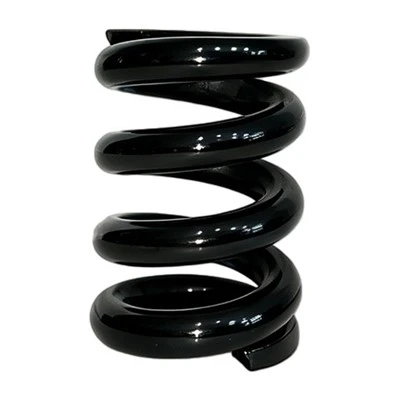
Understanding the Basics of Metal Springs
Before delving into the process of determining the maximum load, it’s essential to grasp some fundamental concepts about metal springs. Metal springs are elastic objects that store mechanical energy when deformed and release it when the deforming force is removed. They come in various types, including compression springs, extension springs, and torsion springs, each designed for specific applications.
The performance of a metal spring is primarily determined by its material properties, dimensions, and manufacturing process. Common materials used in spring production include stainless steel, carbon steel, and alloy steel, each with its unique characteristics such as strength, corrosion resistance, and elasticity.
Factors Affecting the Maximum Load of a Metal Spring
Material Properties
The material of the spring plays a critical role in determining its maximum load capacity. High – strength materials like alloy steels can withstand larger loads compared to softer materials. For example, music wire, a type of high – carbon steel, is known for its excellent fatigue resistance and high tensile strength, making it suitable for springs that need to endure repeated loading.
The modulus of elasticity (E) of the material is another important factor. It measures the stiffness of the material, indicating how much it will deform under a given load. A higher modulus of elasticity means the spring will deform less for a given load, allowing it to support larger loads.
Spring Dimensions
The dimensions of a spring, including its wire diameter (d), mean coil diameter (D), and the number of active coils (n), significantly impact its maximum load capacity.
- Wire Diameter: A thicker wire diameter generally results in a stronger spring. As the wire diameter increases, the cross – sectional area of the wire increases, allowing it to withstand higher stresses without deforming permanently.
- Mean Coil Diameter: A smaller mean coil diameter typically leads to a stiffer spring. When the mean coil diameter is reduced, the coils are closer together, and the spring’s overall stiffness increases, enabling it to support greater loads.
- Number of Active Coils: The number of active coils affects the spring’s flexibility. Fewer active coils make the spring stiffer, while more active coils make it more flexible. A stiffer spring can handle larger loads but may have less deflection.
Manufacturing Process
The manufacturing process can also influence the maximum load of a metal spring. Processes such as cold coiling and hot coiling can affect the grain structure and mechanical properties of the spring material. Cold – coiled springs often have better surface finish and higher fatigue resistance, which can enhance their load – bearing capacity.
Heat treatment is another important step in the manufacturing process. Proper heat treatment can improve the hardness, strength, and toughness of the spring, thereby increasing its maximum load capacity.
Methods for Determining the Maximum Load
Theoretical Calculation
One of the most common methods for determining the maximum load of a metal spring is through theoretical calculations. For a compression spring, the maximum load (P) can be calculated using the following formula:
[P=\frac{Gd^4}{8nD^3}\times\delta_{max}]
where (G) is the shear modulus of the material, (d) is the wire diameter, (n) is the number of active coils, (D) is the mean coil diameter, and (\delta_{max}) is the maximum allowable deflection.
For an extension spring, the maximum load is related to the initial tension, the spring rate, and the maximum allowable extension. The spring rate ((k)) of an extension spring can be calculated using the formula:
[k=\frac{Gd^4}{8nD^3}]
And the maximum load (P) can be found by considering the initial tension ((P_0)) and the additional load due to the maximum extension ((\delta_{max})):
[P = P_0 + k\times\delta_{max}]
Torsion springs are different. The maximum torque ((T)) that a torsion spring can withstand is given by:
[T=\frac{Ed^4\theta}{32nD}]
where (E) is the modulus of elasticity, (\theta) is the maximum allowable angular deflection.
However, these theoretical calculations are based on ideal conditions and assume a homogeneous material and perfect manufacturing. In real – world scenarios, there are often deviations from these ideal conditions.
Experimental Testing
Experimental testing is a reliable way to determine the maximum load of a metal spring. This involves applying a gradually increasing load to the spring until it reaches its failure point.
There are several types of experimental tests:
- Static Loading Test: In a static loading test, a constant load is applied to the spring, and the deflection is measured. The test continues until the spring fails, either by permanent deformation or by breaking. The maximum load at which failure occurs is recorded as the maximum load capacity.
- Dynamic Loading Test: For springs that are subjected to repeated loading in their applications, such as automotive suspension springs, dynamic loading tests are more appropriate. In a dynamic loading test, the spring is loaded and unloaded repeatedly at a specified frequency and amplitude until it fails. This type of test can simulate real – world operating conditions more accurately.
Finite Element Analysis (FEA)
Finite Element Analysis is a powerful tool that uses computer simulations to analyze the behavior of a metal spring under load. FEA can take into account the complex geometry, material properties, and boundary conditions of the spring.
By creating a 3D model of the spring and applying appropriate loads and constraints, FEA can predict the stress distribution, deformation, and maximum load capacity of the spring. This method is especially useful for complex spring designs or when the theoretical calculations are not accurate enough.
Importance of Accurately Determining the Maximum Load
Safety
Accurately determining the maximum load of a metal spring is crucial for safety reasons. If a spring is subjected to a load greater than its maximum capacity, it can fail suddenly, leading to equipment malfunction or even endanger human lives. For example, in an automotive braking system, a failure of a spring can cause the brakes to malfunction, resulting in a serious accident.
Performance
The performance of a device or system depends on the proper functioning of its springs. If a spring is over – designed (i.e., it can handle a much larger load than required), it may increase the cost and weight of the product without providing any significant benefits. On the other hand, if a spring is under – designed, it may not be able to meet the performance requirements of the application.
Working with a Metal Spring Supplier
As a metal spring supplier, we have the expertise and resources to help you determine the maximum load of your springs accurately. We can assist you in selecting the right material, designing the optimal dimensions, and performing the necessary tests.
Our team of experienced engineers can work closely with you to understand your specific application requirements. Whether you need a high – precision spring for a medical device or a heavy – duty spring for an industrial machine, we can provide customized solutions.
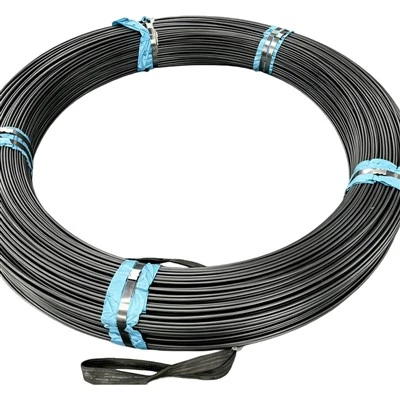
We also offer quality control services to ensure that the springs we supply meet your specifications. Our state – of – the – art testing facilities allow us to perform a wide range of tests, including static and dynamic loading tests, to verify the maximum load capacity of the springs.
Spring Steel Wire If you are in the market for metal springs and need assistance in determining the maximum load or have any other questions about our products, we encourage you to reach out to us for a procurement discussion. Our knowledgeable sales team is ready to provide you with detailed information and support.
References
- "Mechanical Springs Handbook" by Design News
- "Spring Design and Application" by the American Society of Mechanical Engineers (ASME)
- "Engineering Materials and Their Applications" by Donald R. Askeland and Pradeep P. Phule
Baoding Zhongxin Spring Manufacturing Co., Ltd.
We’re known as one of the most reliable metal spring manufacturers and suppliers in China. With abundant experience, we warmly welcome you to buy durable metal spring made in China here and get pricelist from our factory. All customized springs are with high quality and competitive price.
Address: West Side, 200 Meters North of Chenzhuang Gas Station, Pangkou Town, Gaoyang County, Baoding City, Hebei Province, P.R. China
E-mail: 13292951555@163.com
WebSite: https://www.zhongxinind.com/
