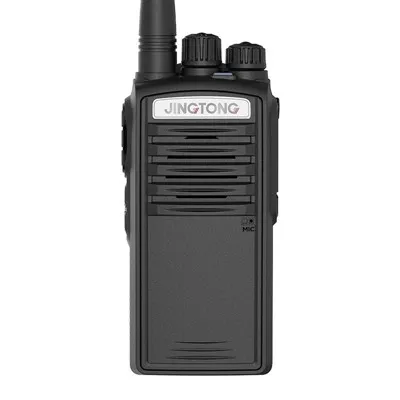
A walkie – talkie, a device that has been a staple in various industries and personal use for decades, often sparks the question: can it be considered an analog radio? As an analog radio supplier, I have delved deep into this topic to provide a comprehensive answer. Analog Radio
Understanding the Basics of Analog Radio
To begin with, let’s define what an analog radio is. An analog radio is a communication device that uses analog signals to transmit and receive information. In an analog system, the audio or other data is represented by continuous electrical signals that vary in amplitude, frequency, or phase. These signals are directly proportional to the original sound or data being transmitted.
The key characteristic of analog radio is its simplicity and directness. The information is encoded in the physical properties of the signal itself. For example, in amplitude – modulated (AM) analog radio, the strength of the radio wave varies in proportion to the sound wave. In frequency – modulated (FM) analog radio, the frequency of the radio wave changes according to the audio signal.
Walkie – Talkies: An Overview
Walkie – talkies are portable, two – way radio transceivers. They are designed to allow users to communicate with each other over short to medium distances. Walkie – talkies have been used in a wide range of applications, from security and event management to outdoor activities like hiking and camping.
Historically, walkie – talkies were predominantly analog devices. They were relatively simple in design, with basic controls for adjusting the channel, volume, and squelch. The early walkie – talkies used analog technology to transmit and receive voice signals.
The Analog Nature of Walkie – Talkies
When considering whether a walkie – talkie can be considered an analog radio, we need to look at its technical characteristics. Most traditional walkie – talkies operate on analog principles. They use analog modulation techniques such as AM or FM to encode voice signals onto radio waves.
In an analog walkie – talkie, the microphone converts sound waves into electrical signals. These electrical signals are then modulated onto a carrier frequency. The modulated signal is transmitted through the antenna. On the receiving end, the antenna picks up the radio waves, and the demodulator extracts the original audio signal from the carrier wave. The speaker then converts the electrical audio signal back into sound waves.
This process is very similar to that of other analog radio systems. The continuous nature of the signals used in analog walkie – talkies is a clear indication of their analog heritage. The audio quality in analog walkie – talkies is also characteristic of analog systems. There may be some background noise and distortion, but the sound is a direct representation of the original voice.
Advantages of Analog Walkie – Talkies as Analog Radios
One of the main advantages of analog walkie – talkies is their simplicity. They are easy to use, with straightforward controls that even novice users can understand. This simplicity also makes them more reliable in some situations. Since there are fewer components and less complex technology involved, there is less that can go wrong.
Analog walkie – talkies also have good range in certain environments. They can penetrate obstacles such as buildings and trees better than some digital counterparts. This makes them suitable for use in areas where line – of – sight communication may be obstructed.
Another advantage is their cost – effectiveness. Analog walkie – talkies are generally less expensive to manufacture and purchase compared to digital models. This makes them an attractive option for budget – conscious users or organizations that need to equip a large number of people with communication devices.
Challenges and Limitations
However, analog walkie – talkies also face some challenges. One of the major limitations is the limited bandwidth. Analog signals can only carry a certain amount of information, which means that the number of available channels is relatively small. This can lead to interference when multiple users are trying to communicate on the same frequency.
The audio quality of analog walkie – talkies can also be affected by environmental factors. Noise, static, and interference can degrade the sound, making it difficult to understand the message. In addition, analog signals are more vulnerable to eavesdropping compared to digital signals, which can be encrypted for greater security.
The Digital Revolution and Its Impact on Walkie – Talkies
In recent years, the digital revolution has had a significant impact on the walkie – talkie market. Digital walkie – talkies have become increasingly popular due to their improved features. Digital technology allows for better audio quality, more channels, and enhanced security.
Digital walkie – talkies use digital modulation techniques to convert voice signals into binary code. This code is then transmitted over the radio waves. On the receiving end, the digital signal is decoded back into voice. The use of digital technology eliminates many of the problems associated with analog signals, such as noise and interference.
Despite the rise of digital walkie – talkies, analog models still have their place in the market. There are many users who prefer the simplicity and reliability of analog devices. In some industries, such as construction and manufacturing, analog walkie – talkies are still widely used because they are easy to operate and can withstand harsh environments.
Conclusion: Can a Walkie – Talkie Be Considered an Analog Radio?
In conclusion, a traditional walkie – talkie can indeed be considered an analog radio. Its use of analog modulation techniques and continuous signals for communication aligns with the definition of an analog radio. However, with the advent of digital technology, the line between analog and digital walkie – talkies has become blurred.
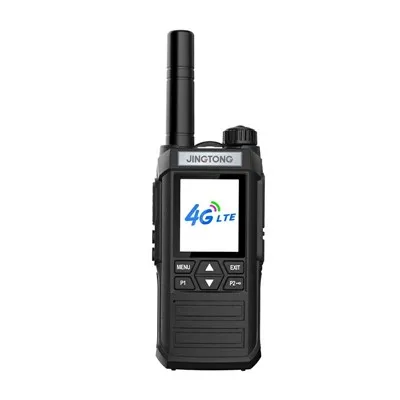
As an analog radio supplier, I understand the unique needs of different customers. Whether you are looking for the simplicity and reliability of an analog walkie – talkie or the advanced features of a digital model, we have a wide range of products to meet your requirements.
Marine Radio If you are interested in purchasing analog radios or walkie – talkies for your business or personal use, I encourage you to contact us for a detailed discussion. We can provide you with expert advice on the best products for your specific needs and help you make an informed decision.
References
- "Radio Communication Handbook" by G4FGQ
- "Two – Way Radio Technology" by John S. Seybold
- Industry reports on the walkie – talkie market from leading research firms.
Jingtong (Quanzhou) Electronics Co., Ltd.
We are one of the most professional analog radio manufacturers and suppliers in China, specialized in providing high quality customized service. We warmly welcome you to buy durable analog radio made in China here from our factory. For price consultation, contact us.
Address: No.288, Si Huang Industry Zone, Xia Mei Town, Nan An, Quanzhou, Fujian province, China 362302
E-mail: jtdjj@jtdjj.com
WebSite: https://www.jteradio.com/
