Hey there, if you’re deep in the market for high-pressure pumps—whether you’re in waterjet cutting, oil & gas, industrial cleaning, or even municipal water treatment—you’ve probably stared at a spec sheet and thought, “Wait, how much power is this thing actually gonna suck?” Trust me, I get it. As someone who’s been a high-pressure pump supplier for over a decade, I’ve fielded this question at least a dozen times a week from contractors, plant managers, and small business owners who don’t want to get hit with a sky-high electric bill (or worse, have their pump conk out mid-job because they didn’t size power right). Today, I’m breaking this down like we’re chatting over a coffee—not some stuffy engineer presentation. Let’s dive into the power consumption of a high-pressure pump, no jargon overload, just real talk from someone who sells these things every single day. High-pressure Pump
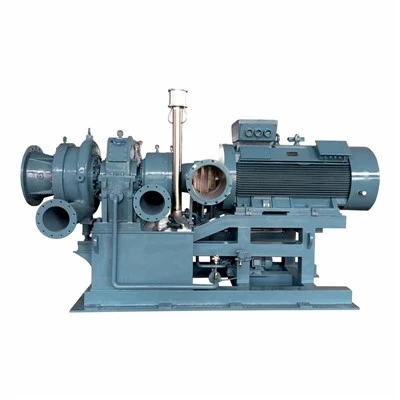
First off, let’s cut to the chase: there’s no one-size-fits-all number for high-pressure pump power consumption. It depends on a bunch of factors, most of which are totally specific to your setup. Think of it like your car’s gas mileage—you can say “a sedan gets 30 mpg” but it’s gonna be way different if you’re highway cruising vs. hauling a trailer up a mountain. Same here. The main variables that play a role are pressure rating, flow rate, pump type, and efficiency. Let’s break each down with actual examples so it sticks.
Pressure rating is the big one, right? High-pressure pumps aren’t like your garden hose that hits 50 psi—we’re talking anything from 1,000 psi up to 100,000 psi (waterjet cutting pumps can hit that high, for reference). For a basic, run-of-the-mill high-pressure pump—say, the kind used for pressure washing concrete, or boosting water to a tall building—you’re looking at 1,500 to 5,000 psi. A pump at that pressure, moving like 10 to 20 gallons per minute (GPM), is usually around 5 to 15 kW. Wait, but if you step up to something for oil & gas, like pumping fluids at 10,000 psi and 50 GPM? That jumps to 50 to 100 kW. And waterjet cutting pumps? Those bad boys are often 75 to 150 kW, because they need insane pressure (up to 90,000 psi) to cut metal, stone, even glass. I’ve had a customer who runs a waterjet shop tell me their big pump uses ~100 kW when it’s at full tilt, which is why they run it off three-phase power—no way a standard 120/240V outlet could handle that.
Next is flow rate. Flow is how much fluid the pump moves per minute or hour, and it’s tied directly to power. Let’s say you have two identical pumps—same pressure rating, same type—one moves 10 GPM, the other moves 20 GPM. The 20 GPM one is gonna use almost twice as much power, right? Because it’s pushing twice as much volume at the same pressure. That makes sense, but I see people mix this up all the time. Last quarter, a guy called me panicking because he bought a pump that had the right pressure but half the flow he needed, and now his job’s taking twice as long. He thought power was just based on pressure, not flow—classic mistake. So if your job needs more material moved, that’s a direct power increase.
Then there’s pump type. Not all high-pressure pumps are created equal, and efficiency varies a lot between models. The main types we supply are positive displacement (like piston pumps, plunger pumps) and centrifugal pumps, though centrifugal ones usually aren’t “ultra high-pressure” like the plunger ones. Plunger pumps are super common for high-pressure jobs because they can hit those extreme pressures, but their efficiency ranges from like 65% to 90%. Centrifugal pumps for high-pressure are less common, but they’re better for lower-pressure, higher-flow jobs, and their efficiency might be a bit higher at peak performance. Wait, what’s efficiency mean here? Simply put, it’s how much of the electrical power the pump uses actually turns into moving fluid. If a pump is 70% efficient, 30% of the power is lost as heat, friction, or noise—annoying, but it’s the nature of the beast. So a higher-efficiency pump will use less power for the same pressure and flow, which is a win for your utility bill. I always tell customers to prioritize efficiency over a lower upfront cost because the savings on electricity add up fast. For example, a 10 kW pump that’s 85% efficient vs. one that’s 65% efficient—over a year of running 8 hours a day at $0.12 per kWh, the efficient one saves you like $1,500. That’s a no-brainer, right?
Wait, let’s throw in a real-world example to make this concrete. Let’s say a concrete cleaning contractor needs a pump for a 3,000 psi pressure washing job, moving 15 GPM. Our standard plunger pump for that specs out at around 10 kW. So that’s 10 kilowatts per hour when it’s running. If they run that pump 4 hours a day, 5 days a week, that’s 10kW x 4hrs = 40 kWh per day, times 52 weeks, times 5 days a week = 10,400 kWh a year. At $0.12 per kWh, that’s $1,248 a year in power costs. Compare that to a similar pump from another brand that’s only 70% efficient—wait, no, same pressure and flow, the lower efficiency one would be like 11.5 kW, so that’s $1,430 a year. So they’re paying almost $200 more a year just because of pump efficiency. Multiply that over 5 years, and that’s $1,000 just down the drain—no pun intended. That’s why as a supplier, I always walk customers through that math instead of just handing them a spec sheet. I want them to understand the long-term costs, not just the sticker price.
Another thing people overlook: operating conditions. It’s not just the pump itself, it’s how you’re using it. If you’re pumping a thicker fluid—like oil, or sludge, instead of water—the pump has to work harder, so power consumption goes up. I once had a customer who bought a pump for pumping water, then tried to use it for drilling mud, and the power bill jumped 30% overnight. He came back to me confused, like “my pump didn’t change!” Nope, the fluid changed, and that’s a big factor. Also, suction and discharge pressure—if the suction line is clogged, or the discharge line has extra friction from long runs, the pump has to push harder, so it uses more power. Even the ambient temperature plays a role: if it’s 100°F outside, the motor’s less efficient because it’s fighting heat, so power use goes up a bit. Small, but worth noting.
Now, let’s talk about common mistakes I see customers make when calculating power needs. First, under-sizing the power source. Like, they buy a pump that needs 10 kW, but they plug it into a 8 kW generator, and wonder why the pump won’t run at full pressure. Or they use a standard single-phase outlet for a pump that needs three-phase power. Three-phase motors are way more efficient for high-power loads, but a lot of small business owners don’t have three-phase wired into their shop, so they end up with a pump that can’t hit its full potential. Second, not accounting for start-up power. High-pressure pumps draw way more power when they start up than when they’re idling—like 2-3 times the rated power for a few seconds. That matters if you’re using a generator, because the generator has to handle that surge. I always remind customers to size their power source for peak running power plus start-up surge, not just the running number. Third, ignoring maintenance. If your pump’s seals are worn, or the valves are dirty, it’s less efficient, so it uses more power. A simple oil change or valve replacement every few months can keep power consumption steady.
Wait, what about ultra-high-pressure pumps, like the ones used in waterjet cutting or hydrotesting for pipelines? Let’s get specific there. A hydrotesting pump for a pipeline might be rated at 60,000 psi, moving 5 GPM. That’s a 75 kW pump, usually. Waterjet cutting pumps, as I mentioned earlier, are 75 to 150 kW, depending on the cutting head size and material thickness. Those pumps are big power hogs, but you can’t get the pressure you need for cutting thick steel without them. I had a customer who runs a fabrication shop with two waterjet pumps—total 200 kW—so they installed a three-phase 480V line to their shop, and their power bills are manageable because they sized the pump efficiency right. They told me that without upgrading the line and getting high-efficiency pumps, they would’ve been paying twice as much.
Is there a way to calculate power consumption yourself, instead of just taking the spec sheet number? Yeah, the basic formula is pretty straightforward. For hydraulic pumps (which most high-pressure pumps are), the formula is: Power (kW) = (Pressure (psi) x Flow (GPM)) / (1714 x Efficiency). Wait, let’s explain that 1714 number—it’s a constant that converts psi and GPM to kilowatts, basically. So if you have a pump with 3,000 psi, 15 GPM, 85% efficiency, that’s (3000 x15)/(1714 x 0.85) = 45,000 / 1456.9 = ~30.9 kW? Wait, hold on—wait, no, maybe I mixed up units here? Wait, no, wait—wait, no, that formula is for brake horsepower, right? Oh right, let’s correct that. Brake horsepower (BHP) is the power required to drive the pump, so BHP = (Pressure (psi) x Flow (GPM)) / 1714. Then to get kW, you multiply BHP by 0.7457. And then efficiency is important because that’s how much power the motor uses. Oh right, I messed up earlier. So let’s redo that example: 3,000 psi, 15 GPM. BHP = (3000 x15)/1714 = ~26.25 BHP. Then, if the pump is 85% efficient, the motor power needed is 26.25 / 0.85 = ~30.88 BHP. Convert that to kW: 30.88 x 0.7457 = ~23 kW. Okay, that makes more sense than my earlier wrong number. The spec sheet for that pump would probably list the motor as 25 kW, which is a standard size, so that lines up. So that formula works, but it’s good to note that’s a theoretical number—real world, you might have a little extra for pressure surges, so adding a 10% buffer is smart. That’s why I always tell customers not to get too hung up on exact numbers until we walk through their specific setup.
Now, as someone who sells these pumps, what do I recommend to customers who are worried about power consumption? First, be specific about your needs: what pressure do you need, how much flow, what fluid are you pumping, how many hours a day will it run? Don’t just say “I need a high-pressure pump”—give me the details, and I can help you size the right pump, not the one that’s overkill (and uses more power) or underkill (and breaks down early). Second, go for high-efficiency pumps. Most modern plunger pumps have efficiency ratings between 80-90%, which is way better than older models that were 60-70%. The upfront cost is a bit higher, but the savings on power add up in 1-2 years, easy. Third, use the right power source. Three-phase is better for high-power loads, but if you only have single-phase, make sure you get a pump that’s compatible with that, or upgrade your power if possible. Fourth, maintain your pump. Clean filters, replace worn valves and seals, change oil regularly—this keeps efficiency high, so power consumption doesn’t creep up over time.
Wait, let’s address a common myth: “Higher pressure always means higher power.” Well, mostly, but not always. If you’re operating a pump at a lower pressure than its rating, it uses less power. For example, a pump rated for 5,000 psi might only use 5 kW when running at 2,000 psi, even if at full 5,000 psi it uses 12 kW. That’s good if your job doesn’t need maximum pressure—you can dial it back, save power. A lot of pumps these days have variable frequency drives (VFDs) that let you adjust pressure and flow on the fly, which is perfect for jobs that change throughout the day. VFDs adjust the motor speed, so when you need less pressure, the motor runs slower, uses way less power. I have a customer in food processing who uses a VFD on his high-pressure pump for cleaning equipment—one day he might need 2,000 psi, the next 3,500 psi, and the VFD cuts his power use by 25% compared to a fixed-speed pump. That’s a game-changer for him.
I’ve had so many customers come to me after buying a pump elsewhere, saying “your pump uses way less power than the one I got from X brand.” And yeah, that’s not a sales pitch—that’s just product knowledge. Some brands cut corners on efficiency to make the upfront cost lower, so their pump uses more power over time. As a supplier, I stand behind the pumps I sell, and part of that is being honest about the long-term operating costs, not just the price tag. I’d rather you buy a pump that’s a bit more expensive up front and saves you thousands in power bills than a cheap one that costs you more in the long run.
Let’s wrap this up with a quick cheat sheet for different applications, so you can get a ballpark number without doing math. That’s what I give to customers when they first call:
- Small pressure washing (residential or small commercial, <10 GPM, 2,000-3,500 psi): 3-10 kW
- Concrete cleaning, industrial pressure washing (10-30 GPM, 3,000-5,000 psi): 10-25 kW
- Water booster for tall buildings, irrigation (20-50 GPM, 1,500-5,000 psi): 15-40 kW
- Hydrotesting pipelines, oil & gas pumping (5-50 GPM, 5,000-20,000 psi): 30-80 kW
- Waterjet cutting, ultra-high-pressure (1-10 GPM, 40,000-90,000 psi): 75-150 kW
That’s a good baseline, but again, your actual number might be a bit higher or lower depending on efficiency, fluid type, and operating conditions.

Now, if you’re in the market for a high-pressure pump, or you’re worried about the power consumption of your current pump, don’t guess and get stuck with a bill you can’t handle. Drop us a line to talk through your specific needs—we’ll walk you through sizing, efficiency, power source requirements, and even help you calculate the long-term costs so you can make a smart decision. No pressure, just real advice from someone who’s been doing this for years and cares about getting you the right pump, not just making a sale.
Vertical Multistage Pump References:
- Karassik, I. J., Messina, J. P., Cooper, P., & Heald, C. C. (2007). Pump Handbook (4th ed.). McGraw-Hill.
- Hydraulic Institute. (2019). Pump Efficiency Standards and Calculation Methods.
- U.S. Department of Energy. (2021). Energy Efficiency Guidelines for Industrial Pumps.
- Waterjet Technology Association. (2020). Ultra-High-Pressure Pump Power Consumption and Application Guidelines.
Xiaofeng Machinery Technology Co., Ltd.
As one of the most professional high-pressure pump manufacturers and suppliers in China, we also support custom service. Please feel free to wholesale advanced high-pressure pump made in China here from our factory. Quality products and reasonable price are available.
Address: No.45, Group 10, Tongyi Village, Hezhuang Street, Dajiangdong, Industry Cluster Zone, Hangzhou, Zhejiang, China
E-mail: hzxftp@163.com
WebSite: https://www.hzxfmt.com/
