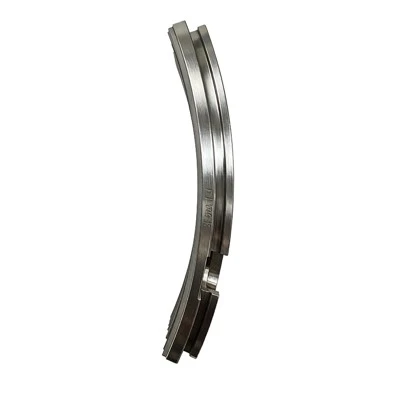
Hey there! I’m a supplier of expander seals, and I often get asked, "What is the leakage rate of expander seals?" It’s a great question, and today I’m gonna break it down for you. Expander Seal

Let’s start with the basics. Expander seals are super important in a bunch of industries. They’re used to prevent fluid or gas from leaking out of systems. Whether it’s in automotive engines, industrial machinery, or even aerospace applications, these seals play a crucial role.
The leakage rate of an expander seal is basically how much fluid or gas can pass through the seal over a certain period of time. It’s measured in different units, like cubic centimeters per minute (cc/min) for liquids or standard cubic centimeters per minute (sccm) for gases.
Now, what affects the leakage rate? Well, there are several factors. First off, the material of the seal matters a lot. We use different materials like rubber, silicone, and PTFE, each with its own properties. Rubber seals are flexible and can handle a wide range of temperatures, but they might have a slightly higher leakage rate compared to PTFE seals. PTFE is known for its low friction and excellent chemical resistance, which often results in a lower leakage rate.
The design of the expander seal also plays a big part. A well – designed seal will fit snugly in the application, creating a better barrier against leakage. For example, if the seal has a proper lip design, it can better conform to the surface it’s sealing against, reducing the chances of fluid or gas getting through.
The operating conditions are another major factor. Temperature, pressure, and the type of fluid or gas being sealed all impact the leakage rate. High temperatures can cause the seal material to expand or contract, which might increase the leakage. Similarly, high pressures can force more fluid through the seal if it’s not designed to handle those pressures.
Let me give you an example. In an automotive engine, the expander seals are exposed to high temperatures and pressures. The oil in the engine needs to be sealed properly to prevent leaks. If the seal is made of a material that can’t withstand the high – temperature environment, the leakage rate will go up. And if the pressure in the engine is too high for the seal’s design, it can also lead to more leakage.
How do we test the leakage rate? We use a variety of testing methods. One common method is the pressure decay test. In this test, we seal the expander seal in a chamber and apply a certain pressure. Then we measure how the pressure changes over time. If the pressure drops, it means there’s a leak, and we can calculate the leakage rate based on the pressure drop.
Another method is the flow measurement test. Here, we measure the actual flow of fluid or gas through the seal. We use flow meters to accurately measure the amount of fluid or gas passing through the seal per unit of time.
As a supplier, we’re always working to improve the performance of our expander seals. We invest in research and development to find new materials and designs that can reduce the leakage rate. We also do a lot of quality control to make sure each seal meets the required standards.
For example, we have a team of engineers who are constantly testing different seal prototypes. They try out new materials and design changes to see how they affect the leakage rate. We also work closely with our customers to understand their specific needs. Maybe they’re in an industry with very high – pressure applications, and they need a seal with an extremely low leakage rate. We can then customize our products to meet those requirements.
When it comes to choosing the right expander seal for your application, it’s important to consider all these factors. If you’re in an industry where even a small amount of leakage can cause big problems, like in the pharmaceutical or food industry, you’ll want a seal with a very low leakage rate. On the other hand, if the application is less critical, and a slightly higher leakage rate is acceptable, you might be able to go for a more cost – effective seal.
Let me tell you about some real – world applications. In the oil and gas industry, expander seals are used in pipelines and wellheads. A high leakage rate in these applications can lead to environmental problems and financial losses. So, seals with low leakage rates are a must. In the manufacturing industry, expander seals are used in hydraulic systems. Leakage in these systems can cause a loss of efficiency and even damage to the machinery.
In conclusion, the leakage rate of expander seals is a complex topic. It’s affected by the material, design, and operating conditions of the seal. As a supplier, we’re committed to providing high – quality expander seals with low leakage rates. If you’re in the market for expander seals and want to learn more about how our products can meet your needs, don’t hesitate to reach out. We’re here to have a chat and see how we can help you get the best seals for your applications.
Turbine Gland Seal References:
- "Sealing Technology Handbook"
- Industry reports on expander seal performance
- Research papers on materials used in expander seals
Jiangsu Turbine Electric Power Technology Co., Ltd.
As one of the most professional expander seal manufacturers and suppliers in China, we have world-leading production equipment and strong manufacturing capabilities. Please feel free to buy advanced expander seal for sale here and get pricelist from our factory. Customized orders are welcome.
Address: Building 8, Huaqi Yungu Xuzhou Lingang Industry Accelerator, Jiawang District, Xuzhou City, Jiangsu Province
E-mail: zjh800@163.com
WebSite: https://www.cnturbine.com/
