If you’ve ever walked into a factory floor, inspected a piece of industrial equipment, or even held a custom-made laptop, you’ve probably glanced at the small metal nameplate that reads the manufacturer, model number, and serial code. What you might not have noticed is the tiny rivet holding that nameplate in place—those unassuming fasteners are more critical to product integrity than most people realize, and one question I get from customers, from aerospace engineers to small-batch appliance makers, keeps coming back: Are there any real standards for the finish of nameplate rivets? Nameplate Rivets
As the owner of a nameplate rivet supplier with 18 years in the game, I get it. Rivets for nameplates aren’t structural, like the ones holding an airplane wing together, but they have to hold up to the same conditions that make a nameplate readable for decades. Rain, salt air, cleaning chemicals, UV light, even accidental scrapes on a loading dock—all of these will take their toll, and a bad finish on those tiny rivets can turn a minor cosmetic flaw into a big brand problem. Over the years, I’ve worked with more than 120 clients to nail down exactly what those standards are, and more importantly, how to apply them to actual parts, not just check a box on a spec sheet.
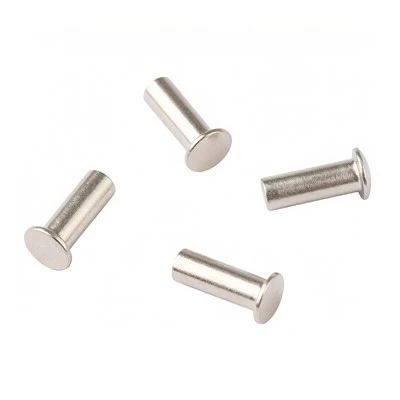
Let’s start with the basics: what counts as a nameplate rivet, and why their finish matters. Unlike solid rivets for high-stress joints, nameplate rivets are usually small—between 1/16-inch and 1/8-inch in diameter, with a shallow head that sits flush (or almost flush) against the nameplate. Their only job is to keep the nameplate from falling off, but their finish is the first line of defense against corrosion. If a rivet rusts or flaks, it can leave brown stains on stainless steel appliance panels, etch into aluminum truck frames, or even peel away so badly that the nameplate comes loose. For a food and beverage brand with a 10-year warranty, that’s not just an aesthetic issue—that’s a compliance risk, and a hit to customer trust.
Now, the standards. Most people think “standards” mean one single global rule, but when it comes to fastener finishes, it’s more of a framework, with different bodies setting guidelines depending on the industry and material. Let’s break down the main ones I reference every day.
First, there’s ASTM F1941, which is the big one for non-structural fasteners used in consumer and industrial equipment nameplates. I don’t just keep a copy on my desk—every production run I process is tested against this. ASTM F1941 specifies finish requirements for carbon steel, stainless steel, and aluminum rivets, with two core tests that matter most for nameplate use: salt spray corrosion resistance and paint adhesion (if you’re using coated rivets). For a rivet to pass ASTM F1941, it has to survive 500 hours of neutral salt spray testing without more than 5% surface corrosion on the head, and any applied finish (like zinc plating or powder coat) can’t chip, flake, or peel when you do a standard cross-hatch adhesion test. That’s non-negotiable for most of my clients—if they’re selling into retail or industrial markets, this is their baseline.
Next, if you’re in a regulated industry, like aerospace or medical devices, you’ll run into SAE AS7003, which is the Society of Automotive Engineers’ standard for fastener finishes in aerospace applications. AS7003 is stricter than ASTM F1941 for one big reason: aircraft and medical equipment are required to maintain their markings for 20+ years in extreme environments. For nameplate rivets under AS7003, the salt spray requirement jumps to 1,000 hours, and the finish has to resist UV exposure too—something ASTM F1941 only mentions as a recommended add-on, not a mandate. I worked with a small aerospace component maker last year who initially asked for standard zinc-plated rivets; when I walked them through AS7003’s requirements, they switched to a nickel-chrome plated finish, and their field testing came back with zero corrosion on rivets after 3 years of outdoor testing, which is a huge win for their warranty program.
Then there’s the often-overlooked ISO 10683, the international standard for fasteners with non-electrolytic zinc flake coatings. A lot of my international clients prefer this, especially those in European markets, where ISO standards are more commonly referenced than ASTM. ISO 10683 sets guidelines for thickness, adhesion, and corrosion resistance, and it’s worth noting that it doesn’t allow hexavalent chromium (hex chrome) in finishes—something a lot of older rivet suppliers used to use, but which is banned in the EU and restricted in the U.S. for most consumer products. I phased out all hex chrome finishes from my catalog in 2019, because even if a client doesn’t explicitly ask for ISO 10683, it’s become a default for parts that will be imported or sold overseas.
Here’s the thing I tell new customers: standards are great, but they only matter if the finish is applied correctly. I’ve seen rivets that met all ASTM F1941 specs fail in the field because the plating process was rushed, or the rivets weren’t properly cleaned before coating. Let’s use zinc plating as an example, which is the most common finish for nameplate rivets. A proper zinc plate has to be at least 5 microns thick, per ASTM and ISO specs. Less than that, and it can scratch off during installation—nameplate rivets are usually installed with a hand press or small rivet gun, not a automated structural riveter, so they take a little more abuse during setup. I once had a client come back to me complaining that 10% of their rivets were rusting within 6 months; when I tested the parts, their previous supplier had used a 2-micron zinc plate, which didn’t meet the ASTM requirement. The client switched to my parts, and they haven’t had a single corrosion complaint in two years.
Another common finish is stainless steel. If you’re making nameplates for marine equipment or outdoor signage, stainless steel rivets are a no-brainer, but not all stainless grades are equal. ASTM F1554 specifies grades for fasteners, and for nameplate use, you want at least 304 stainless steel. 301 is cheaper, but it’s more prone to rust in salt air, and 410 is too brittle—It’ll snap when you try to rivet a nameplate to a curved surface, like a truck fender. I always recommend testing stainless steel rivets for their passivation, too—passivation is a process that removes free iron from the surface, which prevents rust. A lot of cheap stainless rivets skip this step, so even if it’s grade 304, it’ll stain the nameplate. I have a small vial of passivation solution on my desk that I use to test every batch of stainless rivets that comes in, just to make sure my clients don’t get stuck with that problem.
Coated finishes are another area where standards get specific. Powder coating is popular for colored nameplates, like those for home appliances or office equipment. The ASTM B117 standard, which is tied to F1941, requires powder coated rivets to survive 300 hours of salt spray without chipping, and the coating thickness has to be between 25 and 50 microns. I worked with a commercial refrigerator manufacturer last year who wanted red rivets to match their brand color; their previous supplier used a 15-micron powder coat, which scratched during installation. We adjusted the thickness to 35 microns, used a UV-stabilized powder that meets ISO 10683, and the client’s parts now pass their in-house durability testing with no issues.
Wait, but what about small-batch or custom orders? A lot of my clients are startups or small manufacturers who don’t need to meet AS7003 or jump through regulatory hoops, but they still need their rivets to look good and last. For those, I don’t just rely on formal standards—I go by what my 18 years of experience tells me. For example, if a startup is making a custom laptop, I suggest aluminum rivets with a clear anodized finish, which doesn’t add color but resists scratches and corrosion better than bare metal. For a craft brewery making metal nameplates for their kegs, I suggest black oxide coated rivets, which give a matte, industrial look that matches their brand, and they pass ASTM F1941 corrosion tests without being overkill.
I get a lot of questions from clients who ask, “Can I use a cheaper finish to save money?” The answer is almost always no, and here’s why: I had a client last year who tried to source rivets from a overseas supplier that charged 20% less per thousand. The rivets looked identical, but after 8 months, 15% of their nameplates were loose, because the finish had corroded so badly that the rivet head broke off when it was installed. The client had to recall 2,000 units, which cost them $50,000 in returns and repair fees—way more than they saved on the cheap rivets. Standards aren’t arbitrary; they’re the result of thousands of hours of testing to make sure a part works as intended.
So, to circle back to the original question: Are there standards for the finish of nameplate rivets? Yes, but they’re flexible, depending on your industry, location, and how long you need the rivets to last. The baseline is ASTM F1941 for most North American industrial and consumer products, ISO 10683 for international markets, and AS7003 for regulated industries like aerospace and medical. The key isn’t just checking a box on a spec sheet—it’s making sure the finish is applied correctly, using the right material grade, and testing to make sure it will hold up to the specific conditions your product will face.
If you’re in the market for nameplate rivets, or you’ve had trouble with corrosion or loose nameplates before, I’m here to help. I’ve worked with clients of all sizes, from small startups to Fortune 500 companies, to source rivets that meet their exact needs, whether that’s meeting a strict industry standard or keeping costs low for a custom order. We can walk through your specific requirements, test a sample batch, and make sure your nameplates stay secure and look great for years.
References
Hollow Rivets ASTM F1941-19, Standard Specification for Non-Structural Fasteners for Use in General Industrial Applications
SAE AS7003B, Fastener Finish, Non-Electrolytic Zinc Flake Coated
ISO 10683:2019, Fasteners – Non-electrolytically applied zinc flake coatings
ASTM B117-19, Standard Practice for Operating Salt Spray (Fog) Apparatus
Wenzhou Liao Fasteners Co., Ltd.
As one of the most professional nameplate rivets manufacturers and suppliers in China, we also support customized service. Welcome to wholesale high quality nameplate rivets in stock here from our factory. If you have any enquiry about cooperation, please feel free to email us.
Address: No.93 Liaodong Road, Liao Subdistrict, Ouhai District, Wenzhou City, Zhejiang Province, China
E-mail: zhengyue1687@163.com
WebSite: https://www.liaomet.com/
