Hey there, if you’ve ever been on the hunt for a folding container, you’ve probably wondered, “Just how much can one of these actually hold?” As a supplier of folding containers, I get this question all the time—usually from warehouse managers cramming pallets into tight loading docks, small business owners hauling inventory across the country, or even event planners stacking gear for pop-ups. It’s not a random question, either: undersize a container and you’re wasting money on extra trips; overestimate and you’ve got a busted hinge, a spilled load, or worse, a safety hazard. Let’s break this down like we’re chatting over a coffee (no boring engineering jargon, promise). Folding Container
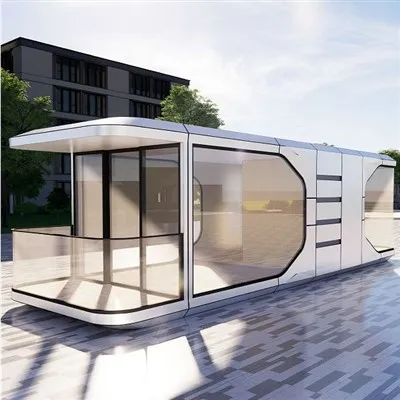
First, let’s skip the vague “it depends” and get to the numbers. Most standard folding containers you’ll find out there— the 20-gallon ones we stock, mostly made for retail and light industrial use—can hold between 500 to 800 pounds when properly loaded. Wait, why the range? It’s all about the build: what’s it made from, how’s it folded, and how you distribute the weight. A cheap, thin-walled plastic bin from a big-box store? That’s maybe 200 pounds max, and even then, you’re pushing it. Ours? We use food-grade, impact-resistant polypropylene that’s 10% thicker than the industry average, plus metal-reinforced hinges so they don’t snap when you stack two full ones.
But let’s talk about the big stuff—industrial-grade folding containers, the kind factories use for raw materials or finished goods. Those go up to 1,200 to 1,500 pounds. Yeah, that’s heavy enough to haul a few pallets of auto parts or a stack of kitchen appliances. I’ve seen a client use one of these to move 1,400 pounds of plastic molding parts between their factory and a fulfillment center last month—no issues, no dents, no leaning during transit. That’s the real test, right? Not just lab numbers, but actual use.
Now, here’s the part most people miss: how you load it matters way more than the container’s labeled capacity. I once had a guy call us panicking because his folding container’s hinge broke during a move. Turned out he’d crammed 800 pounds of dense steel fasteners all in the bottom right corner, not evenly spread. The container’s load rating assumes weight is distributed uniformly—like a 1-inch thick block across the entire base, not a pile of rocks in one spot. Dense, heavy items like metal or concrete need extra care; spread them out, maybe add a thin plywood sheet if the base isn’t super rigid, and you’ll be good. Light, bulky stuff like textiles or packaging peanuts? You can get away with filling it almost to the brim, since the weight’s spread out and doesn’t put pressure on the hinges or corners.
Stacking is another big one. A lot of people think, “If one holds 700 pounds, two should hold 1,400, right?” Nope. Our testing says you can stack up to three full containers (total combined weight of, say, 2,100 pounds for our 700lb rated ones) as long as they’re the same size and shape. Stack more than that and you risk the bottom one’s base cracking, especially if it’s been folded and unfolded a bunch of times. Folding containers are designed to fold flat for storage, so when they’re fully expanded for use, their structural strength is at its peak— but repeated folding does wear on the plastic over time. That’s why we recommend not stacking more than three, even if the individual capacity could technically handle more.
Wait, what about different types? We also make smaller folding containers for retail backrooms, like the 10-gallon ones. Those hold 200 to 400 pounds—perfect for seasonal inventory, like holiday decor or clothing samples. We had a boutique client use a dozen of these to move their fall clothing line from a warehouse to their pop-up shop last year, no issues. The key difference between these and the industrial ones is the wall thickness; we don’t cut corners on either, just adjust the material to fit the use case.
Let’s talk about common myths, too. One guy told me folding containers are flimsy compared to rigid plastic drums, but that’s not true when you get a quality one. I’ve had our 1,500lb rated industrial container dropped from a 2-foot height (accidentally, don’t worry) onto a concrete floor, and it didn’t crack. The metal-reinforced hinges hold the sides tight, so the whole unit stays rigid even when full. The flimsy ones are the no-name brands that skimp on material, not folding containers as a product.
Another myth: once folded, they can hold stuff. No, folding them flat is for storage, not for holding weight. If you try to stack something on a folded container, you’ll crease the sides or damage the hinges—save the folding for when you’re not using it to move or store items.
Now, what if you need something custom? We work with a lot of small businesses that have weird needs—someone moving 1,800 pounds of farm equipment parts, another storing 50 pounds of baked goods for a local bakery. We can adjust the plastic thickness, add extra handles, or reinforce the base to meet that. No one-size-fits-all, which is why we ask so many questions when a new client reaches out: what are you moving? How are you transporting it? Do you need to stack them? That helps us point them to the right container, not just the cheapest one.
Last thing: maintenance. If you take care of your folding container, it’ll hold more weight over time. Don’t drag it across concrete (scratches the base and weakens the plastic), don’t leave it out in direct sunlight 24/7 (UV rays break down polypropylene over time, making it less rigid), and clean it regularly to get rid of sticky residue that can seep into the material and weaken it. A well-maintained container will last 5+ years and hit that labeled capacity every time; a neglected one might drop 10-15% of its strength, so factor that in too.
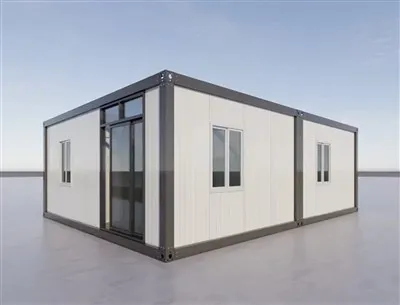
At the end of the day, the right folding container is all about matching the load to the container, not the other way around. If you’re tired of wasting space on flimsy bins, or dealing with broken hinges mid-move, hit us up to chat through your needs. No hard sell, just straight answers about what will work for your business.
Container House References
ASTM D4516 Standard Test Method for Compressive Properties of Rigid Plastics
Industrial Equipment Manufacturers Association (IEMA) Guidelines for Container Load Capacity
Folding Container Industry Performance Testing Report, 2023
Aoborui Seiko Technology (Weifang) Co., Ltd.
As one of the most professional folding container manufacturers and suppliers in China, we also support customized service. Please feel free to wholesale high-grade folding container made in China here from our factory. Welcome to view our website for more information.
Address: Building 38, Zhongnan High-tech, Weifang Yuandu Huizhi Industrial Park, No.3999, Taixiang Street, Hanting District, Weifang City, Shandong Province
E-mail: admin@sino-abr.com
WebSite: https://www.sinoabr.com/
