Hey everyone,
Ever grabbed an extension cord mid-use and noticed it’s way hotter than it should be? I’ve lost count of how many times a customer or even a friend has sent me a message going, “Hey, my cord’s smoking a little — is that normal? Am I gonna burn my garage down?” As a supplier who’s been working with extension cords for almost a decade now, I get it. It’s not just a random weird thing — there’s actual science behind why that cord’s heating up, and no, most of the time it’s not a reason to panic… but it is a reason to pay attention. Let’s break this down without all the jargon, okay? Extension Cord
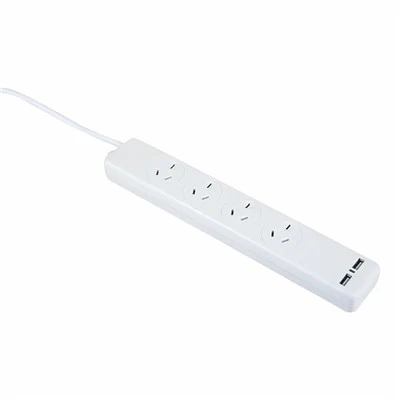
First, let’s start with the basics: what an extension cord actually does. It’s just a long piece of wire carrying electricity from your outlet to whatever tool or appliance you’re using, right? But here’s the thing — electricity moves through metal, and metal has something called resistance. Resistance is basically how much the metal slows the flow of electrons down. Whenever electrons hit that resistance, a little bit of energy gets lost as heat. That’s not a flaw; that’s just physics. Even your phone charger gets warm, right? Same idea — just on a way smaller scale.
So why is your cord getting too hot? Let’s talk amps first, because this is the big one. Extension cords are rated for a maximum amount of current they can handle without overheating. That’s the numbers you see on the tag — like 14AWG 15A, or 12AWG 20A. AWG is American Wire Gauge, and the lower the number, the thicker the wire. Thicker wire = less resistance = less heat. Thinner wire = more resistance = more heat. Here’s where people mess up: they grab a random long cord for a high-amp tool, like a circular saw or a space heater, and that’s a recipe for hotness.
Let me use an example. Suppose you’re using a 15-amp table saw. If you plug it straight into the wall, you’re golden — the outlet is built for that. But if you need a 100-foot cord, you can’t use a 16AWG cord (that’s super thin, usually for low-amp lamps). That 16AWG would have too much resistance over 100 feet, so the saw pulls 15 amps through it, and all that extra resistance turns into heat. Crank that up to a 20-amp space heater and a 50-foot 14AWG cord? Still maybe too much — the longer the cord, the more amps it can’t handle without heating up. I’ve seen this happen so many times: a contractor uses a cheap thin cord for a jackhammer, comes back to find the insulation melted a little. That’s not a defect — that’s using the wrong cord for the job.
Next up, bad connections. I’m not talking about plugging into a wall outlet correctly (though that helps) — I’m talking about loose plugs at both ends. If your tool end isn’t clicked in all the way, or the cord splits into an adapter that’s wobbly, there’s a tiny gap. Electricity has to jump that gap, right? And when it jumps a gap, it creates resistance — and heat. Even something as small as a frayed spot on the cord, or a tiny nick in the insulation that frays a little on the inside, can create a tiny hot spot. I remember a customer last year who kept having his workshop cord get hot, and it turned out the plug inside the tool was loose — he’d yanked the cord too many times, so the prongs weren’t making full contact. Fixed that plug, and the heat was gone instantly.
Then there’s overloading. This is different from wrong amp rating, though they overlap. If you plug a space heater (1500 watts, so ~12.5 amps) and a power drill (~5 amps) into the same extension cord, that’s 17.5 amps total. Most standard household cords are 15 amps max — so you’re pushing more current than the cord’s designed for. That extra current hits more resistance, and boom — heat. Some people think “more plugs = more power” but no, extension cords aren’t power strips that multiply electricity. They’re just wires — they can only carry so much at once.
Wait, but when is heat actually normal? Let’s set expectations here. A small amount of warmth — like, warm to the touch, not hot enough that you can’t hold it without yanking your hand away — is totally fine. Even a properly matched cord will get a little warm when running full power. I tell my customers all the time: if you touch it for two seconds and have to let go fast, that’s a problem. If it’s just a little warm, that’s just physics doing its thing.
Now, let’s talk about the mistakes people make that cause unnecessary heat, and how to fix ‘em. First, size the cord right. Let’s make this easy: if your cord is under 25 feet, 16AWG is fine for up to 13 amps. 25-50 feet, use 14AWG for up to 15 amps. 50-100 feet, go 12AWG for up to 15 amps, or 10AWG for 20 amps. I’ve got a little chart we print on the back of every cord tag, and half the time customers just skip reading it — that’s where the issues start.
Second, check your connections. Every time you plug in, make sure both ends are firmly seated. No wiggling, no weird gaps. If a plug is loose inside your tool, replace the end — it’s cheap and takes 2 minutes. Also, don’t run the cord under rugs or furniture, or twist it up tight in a coil when in use. Wait, the coil thing is a big one! If you wrap a long cord into a tight loop, it traps the heat inside instead of letting it dissipate. I’ve seen someone run a 50-foot cord coiled up behind a workbench, and it got way hotter than it should have just because it couldn’t cool down. Uncoil the whole thing when you use it — that’s an easy fix.
Third, inspect your cord regularly. I get so many questions about “is my old cord safe?” — and the answer is, check it. Look for cracks in the insulation, frayed wires, bent prongs on the plug. Even a tiny crack where the wire is exposed can create a hot spot. If you see damage, don’t tape it up and keep using it — replace it. The tape might hold the insulation in place, but it doesn’t fix the resistance from the exposed wire. We sell replacement plugs for exactly this reason — it’s way cheaper than buying a whole new cord, and it keeps you safe.
Now, let’s address the elephant in the room: could a hot cord be a fire hazard? The short answer is, only if you ignore the signs. If it’s so hot the plastic insulation starts to smell like burning, or you see smoke, pull the plug immediately. That’s not normal. But if it’s just warm, you’re using the right cord, and connections are tight? It’s just the cord doing its job. I’ve had a few people panic when they first feel heat, and then when we go through the cord specs together, they realize they were using a 100-foot 16AWG cord for a 15-amp mower — they switched to a 12AWG, and no more heat.
As someone who’s built extension cords for years, I’ll be honest: not all cords are made equal. Cheap cords from the hardware store with thin insulation or copper that’s not pure — they’ll heat up way faster than a quality cord. Why? Because cheap copper has more impurities, so more resistance. Pure copper (which we use) has less resistance, so less heat. Insulation matters too — if the insulation is thin, it can’t handle as much heat before it melts. That’s why we use heat-resistant vinyl on all our cords — it’s not just for durability, it’s for safety when you’re running full power.
Wait, another thing: outdoor vs. indoor cords. Don’t use an indoor cord outside, even if it’s plugged into a tool. Outdoor cords are made to handle temperature swings, moisture, and UV light — they’re thicker, and the insulation is designed to not break down in the sun or rain. If you use an indoor cord outside in 90-degree heat, it’ll get hotter faster because the environment is already warm, plus the wire is doing its job. That’s a double whammy. I can’t tell you how many times a customer has called saying their cord got hot outside, and it turned out they used an indoor cord.
Let’s wrap this up with a quick checklist so you don’t have to remember all the science:
- Is your cord rated for the amperage of your tool/appliance? Check the tag — tool amps are usually on the nameplate.
- Is the cord the right length for the job? Longer = thicker wire needed.
- Are both ends of the plug tightly connected, no wiggles?
- Is the cord uncoiled when in use, not under rugs or stuff?
- Is it warm (okay) vs. way too hot to touch (not okay)?
- Is it outdoor use, using an outdoor-rated cord?
If you’re still not sure which cord is right for you, don’t guess — that’s how you end up with a hot cord. We’ve been making extension cords for years, and we can help you pick the right one for whatever job you’re doing. Whether it’s a small cord for your leaf blower or a heavy-duty one for construction, we’ve got options. Just reach out, and we can walk you through sizing, ratings, and anything else you need to stay safe and get the job done.
At the end of the day, a hot extension cord isn’t a mystery — it’s just a mix of basic physics, wrong sizing, or loose connections. It’s easy to fix once you know what to look for. I’ve seen too many people get spooked by it, but most of the time, it’s a simple adjustment, not a disaster. Don’t let that little bit of heat stress you — just follow the checklist, and if you need help picking the right cord, hit us up for a chat.
Extension Cord References:
- National Electrical Code (NEC) Handbook, Chapter 3: Branch Circuits and Feeders
- Electrical Resistance in Conductors, Physics Classroom
- Underwriters Laboratories (UL) Standard for Extension Cords, UL 817
Yuyao Mideal Electric Co., Ltd.
Yuyao Mideal Electric Co., Ltd. is one of the most professional extension cord manufacturers and suppliers in China, also supports customized service. With abundant experience, we warmly welcome you to wholesale cheap extension cord in stock here from our factory. For price consultation, contact us.
Address: No.28, Lujiafan Road, Langxia Street, Yuyao City, Zhejiang Province, China
E-mail: manager@nbmideal.com
WebSite: https://www.midealcord.com/
