If you’ve ever spent time troubleshooting weak home internet during a thunderstorm, or noticed a wobbly coax connector behind your TV, you’ve probably wondered if you can pair a coax adapter with a surge protector. As someone who’s been supplying coax adapters for residential and commercial setups for over a decade—seeing customers mix and match components, fix avoidable issues, and sometimes create new ones—it’s one of the most common (and most important) questions I get. Let’s break this down without the tech jargon, so you can make a call that keeps your gear safe and your signal strong. Coax Adapter
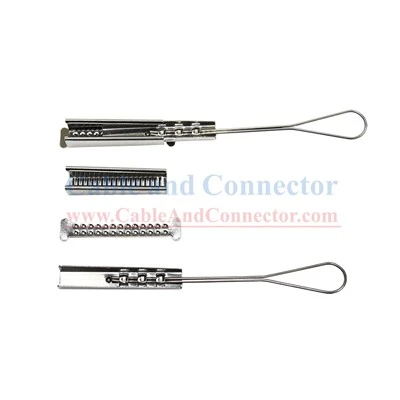
First, let’s get clear on what each part does, because that’s where most confusion starts. A coax adapter is a simple, precision-engineered piece of hardware: it’s designed to extend, convert, or repair coaxial cables, which carry radio frequency (RF) signals for cable TV, internet, satellite, and even some security systems. Think of it like a little matching piece that turns a loose F-type connector on your old cable box into a snug F-type for your new modem, or connects a long run of wall coax to a shorter one near your entertainment center. A good coax adapter doesn’t alter the signal—it just maintains its integrity while connecting two segments.
A surge protector for coax, though, is a whole different animal. Unlike the power strip surge protectors you plug your laptop into, coax surge protectors are built specifically to handle RF signals and the sudden power spikes that come with them. When lightning strikes near a power line or a cable line, it generates an electromagnetic pulse (EMP) that travels through the cable at hundreds of miles per hour. That spike can fry a modem, cable box, or satellite receiver faster than you can unplug it. Coax surge protectors have a built-in component called a gas discharge tube or varistor that diverts that excess voltage away from your gear and into the ground, instead of letting it flow straight to your devices.
So can you actually use these two together? The short answer is yes—when done right, it’s not just possible, it’s recommended. But here’s where the mistakes happen: people often pick the wrong adapter or mount them incorrectly, which negates the surge protection or even damages the adapter. Let’s start with the basics of how to pair them safely. The most reliable setup is: wall coax outlet → coax surge protector → coax adapter → device (modem, cable box, etc.). Why order matters? Coax signals are directional—they flow from the wall to your device, and putting the surge protector closest to the source (the wall) means it catches the spike before it ever reaches the adapter or your gear. If you put the adapter between the surge protector and the device, that setup still works, but you’re losing the surge protection’s barrier right at the entry point of the line, which is where spikes are strongest.
Now, let’s talk about the adapter part—because not all coax adapters are made equal, especially when paired with surge protectors. For 10 years, I’ve seen customers buy cheap, no-name adapters from big-box stores that have uneven internal connectors, plastic instead of metal shielding, or gaps that let RF signals leak. When you pair that with a surge protector, two things can go wrong. First, a poorly shielded adapter can cause signal loss, making your internet slow or your TV pixelate—because the surge protector is already filtering the signal, and a bad adapter adds more loss on top of that. Second, if the adapter isn’t rated for the same frequency range as your surge protector, it can cause signal reflection, which can weaken the surge protector’s performance over time. I once had a customer call me panicking because his new surge protector kept tripping his modem; it turned out he’d used a $2 adapter that only worked up to 1GHz, and his new surge protector was built for signals up to 3GHz. The frequency mismatch created a signal that bounced back, overwhelming the surge protector’s ability to divert power spikes.
Another common question: can I use a 3-way or 4-way adapter with a surge protector? Let’s say you have a wall outlet that needs to connect to your modem, TV, and security camera. A multi-port coax adapter lets you split the signal, but here’s the catch: you need a surge protector that has multiple ports too. Don’t use a single surge protector and then split the signal with an adapter—any spike that gets through will be split across all your devices, and the single surge protector won’t have enough capacity to divert that extra power. I always recommend either a multi-port coax surge protector or pairing individual surge protectors for each device, each with a precision adapter rated for that specific connection.
Wait, but what about ground continuity? That’s a detail most people miss, but it’s make-or-break for surge protection. Coax systems rely on a proper ground connection to divert spikes safely—if your surge protector isn’t grounded, it’s just a fancy adapter that doesn’t do anything to stop spikes. The same goes for your coax adapter: if the adapter has a metal outer shielding (which all our adapters do), it should form a continuous path with the surge protector’s grounding point. A cheap adapter with a plastic outer shell won’t connect to the surge protector’s ground, breaking that safety chain. I’ve had a customer come to me after a thunderstorm that fried his modem; he told me he used an old adapter he’d had for years, and when we checked it, the metal shielding inside had corroded, so it didn’t connect to the surge protector’s ground. The spike traveled right through the ungrounded adapter to his modem.
Let’s bust a common myth here: some people think pairing an adapter and surge protector will cause signal loss. Sure, if you use a cheap adapter, or if you add too many extra connectors between the wall and your device, you’ll get some loss. But a high-quality coax adapter (the kind we supply, with precision-machined metal connectors, full shielding, and gold-plated pins for signal clarity) has almost no measurable loss—less than 0.2dB, which is undetectable for residential setups. When paired with a coax surge protector rated for your frequency range, the total signal loss is so minimal you won’t notice a difference, and you’ll have the extra protection against storms.
I’ve also seen people use adapters that aren’t F-type, which is the standard for most residential coax setups. For example, some older satellite systems use BNC connectors, or newer HDMI-over-coax adapters that need conversion between coax and HDMI. Can you pair those with a surge protector? The short answer is: only if the surge protector is compatible with the converted signal type. A standard coax surge protector won’t work for HDMI-over-coax, because HDMI carries digital signals that work at different frequencies. For those, you need a surge protector specifically rated for digital coax or HDMI-over-coax, and an adapter rated for digital signal integrity. This is why it’s important to check the ratings of all your components, not just grab whatever’s on the shelf.
Let’s talk about a real-world example, something I see every month. A customer moved into a new home, hired an electrician to install a new coax line, and bought a cheap surge protector from a big box store, plus a random adapter from the store’s dollar bin for $1. A few weeks later, during a summer thunderstorm, his modem died, and his internet was out for three days. When he brought all the parts to me, we tested the setup: the adapter was only rated for 1GHz, his surge protector was rated for 3GHz, and the adapter’s metal shielding was so thin it was barely touching the surge protector’s ground pin. The spike from the storm traveled through the line, the adapter didn’t ground it, and it fried the modem. I helped him replace the cheap adapter with our premium F-to-F adapter, matched the frequency to his surge protector, and adjusted the order of installation. A month later, he texted me to say another storm rolled through, and his modem was fine. That’s the difference between using the right components together, versus grabbing whatever’s cheap.
Now, what about commercial setups? For businesses with multiple coax lines, or setups that use high-frequency signals for cable TV, security cameras, or industrial internet, the rules are the same but the stakes are higher. A bad adapter paired with a surge protector can cause signal loss that disrupts business operations, or even damage more expensive equipment like server racks. We supply coax adapters for commercial use that are rated for up to 10GHz, have military-grade shielding, and are designed to work with industrial-grade surge protectors. The same principle applies: order matters, ground continuity is key, and matching ratings will keep your system safe and functional.
One last tip I always give customers: if you’re unsure about your setup, test it. Most local tech shops (and even many online retailers like us) offer free testing for signal loss and ground continuity, or you can buy a $20 coax signal tester from a home improvement store. Plug the tester into the wall, then through your adapter and surge protector, and see if the signal strength is within the acceptable range (for residential, that’s usually between -5dB and +5dB). If it’s lower, you either have a bad adapter, a loose connection, or a mismatch in frequency. Fix that before you have a problem during a storm.
At the end of the day, the question “Can I use a coax adapter with a surge protector?” isn’t a yes or no—it’s a how. It works when you pick high-quality, rated components, mount them in the right order, and ensure proper ground continuity. The mistake most people make is cutting corners on the adapter, which is often the small, overlooked piece that breaks the chain between the line and your gear.
If you’re upgrading your home or business coax setup, or need help picking the right adapter to pair with your surge protector, we’re here to help. We supply a full range of coax adapters for residential, commercial, and industrial use, all tested for signal integrity and compatibility with surge protectors. Whether you need a simple F-to-F adapter, a multi-port splitter adapter, or a specialized adapter for digital or high-frequency setups, our team can walk you through the right choice for your needs. Reach out to start a conversation about your project or setup requirements.
Coax Adapter References:
- Federal Communications Commission. (2021). Coaxial Cable Safety and Signal Integrity for Residential and Commercial Use. FCC Consumer Technology Guide.
- Underwriters Laboratories. (2022). Standard for Surge Protectors for Coaxial Communication Circuits. UL 1449.
- Society of Cable Telecommunications Engineers. (2020). RF Signal Loss and Component Compatibility in Coax Networks. SCTE Standards Bulletin.
- National Electrical Code. (2023). Grounding Requirements for Communication Systems (Article 820). NFPA.
Zhejiang Cable and Connector Optic Co., Ltd.
As one of the most professional coax adapter manufacturers and suppliers in China, we have world-leading production equipment and strong manufacturing capabilities. Please rest assured to wholesale custom made coax adapter at competitive price from our factory.
Address: 1517 East Communications Building, No.398, Wensan Road, Xihu District, Hangzhou City, Zhejiang Province, China.
E-mail: Sales@CableAndConnector.com
WebSite: https://www.zjcableandconnector.com/
