If you’ve ever navigated a gravel-lined backroad, scraped over a fallen log in a national forest, or even nicked a speed bump a little too sharply, you know how much your vehicle’s undercarriage takes. For most of us, that protection comes from a skid plate— a simple, often overlooked piece of hardware, but one that quietly does the heavy work of shielding your transmission, oil pan, fuel lines, and other critical components from impacts, debris, and corrosion. For years, I’ve supplied skid plates to off-road enthusiasts, commuters, and fleet managers alike, and one question I get more than any other is this: “Do skid plates even need maintenance?” Skid Plate

It’s easy to look at a solid steel or aluminum plate and assume it’s indestructible. After all, it’s built to take a beating, right? The short answer is yes—skid plates do require regular care and attention. But not because they’re fragile. It’s the exact job they’re designed to do that makes maintenance non-negotiable. Let’s break this down, starting with what skid plates actually endure, then walking through the specific checks and care that will keep yours working for years, and why cutting corners here can cost you far more than a few minutes of upkeep.
First, let’s get clear on the types of skid plates we supply, because maintenance needs vary a bit by material, and that’s a detail a lot of owners miss. We offer three primary options: hot-rolled steel, aluminum alloy, and a lightweight composite blend. Hot-rolled steel is the workhorse—tough enough to take direct hits from rocks and fallen branches, common on pickup trucks and heavy-duty off-road rigs. Aluminum is lighter, better for gas mileage, and resistant to rust, which makes it popular for passenger SUVs and crossover vehicles. The composite plates are synthetic, designed for soft debris like mud and light impacts, often on compact off-roaders. Each has strengths, and each has unique maintenance demands.
The first and most critical thing to check, regardless of material, is mounting integrity. Skid plates don’t do their job if they’re loose. Think about it: when you hit a rock, a properly secured plate absorbs and distributes that impact force away from your transmission or oil pan. If the bolts, brackets, or spacers holding it in place are loose, that impact can shift the plate, or worse, send debris wedging between the plate and the undercarriage, damaging components they’re supposed to protect. We see this all the time: a customer comes to us with a bent oil pan, and when we inspect their skid plate, we find three of the eight mounting bolts missing. They’d skipped checking the plate after a few off-road trips, and vibrations on the highway had worked the bolts loose over time.
How often should you check mounting? If you’re an off-road enthusiast hitting trails a few times a month, do this after every 5-6 outings. For daily drivers who only scrape a speed bump or two a week, a quick check once a quarter is enough. It doesn’t have to be a big deal: pop your vehicle on a lift (or use a jack and jack stands safely, if you’re comfortable) and run your hands along the edges of the plate. Give each bolt a gentle twist—if it moves more than a half turn, it’s too loose. Most mounting kits come with lock washers, which are there to prevent vibration from loosening bolts, but even lock washers wear out over time. We supply extra lock washers with every replacement skid plate, and I always tell customers to swap them out every time they re-torque bolts, just to be safe.
Next up: cleaning and corrosion, and this is where a lot of owners go wrong. For steel skid plates, corrosion is a slow, silent killer. I’ve had customers come to us with a plate that looked fine on the surface, only to find it had rusted through in spots after two years of driving near the coast or on roads salted in winter. Salt, mud, and road grime get trapped between the skid plate and the undercarriage, and they create a perfect environment for rust—even on thick steel. If you leave that grime caked on, it doesn’t just damage the skid plate itself; it can trap moisture against the metal of your transmission or fuel tank, leading to rust on parts that are way more expensive to replace.
Aluminum skid plates, while rust-resistant, aren’t immune to damage from debris. Sharp rocks or gravel can scratch the anodized coating that protects aluminum from minor corrosion, and those scratches can trap mud and salt just like rust on steel. Composite plates, while durable against light impacts, can degrade if left caked in wet mud or chemicals over time— the synthetic material can crack or become brittle if it’s never cleaned.
So how often should you clean your skid plate? For anyone driving on salted roads (winter in most of North America, for example), cleaning after every snow season is non-negotiable. Off-roaders, especially in muddy areas, should give their plate a thorough power wash after every trail run—paying special attention to the gaps between the plate and the undercarriage, where mud and debris hide. For daily drivers with no exposure to salt or heavy off-road use, a once-a-year cleaning is enough. Skip the high-pressure power wash if your plate is mounted close to delicate components—too much pressure can bend thin aluminum or dislodge wiring harnesses routed near the undercarriage. A garden hose with a stiff brush works just as well for most grime.
Then there’s damage assessment. Skid plates are sacrificial, in a way—they’re designed to take hits so your expensive engine parts don’t have to. But that doesn’t mean you should ignore those hits. A small dent in a steel plate might look like no big deal, but that dent can weaken the structure over time, turning a minor rock strike into a full crack during a bigger impact. For aluminum plates, a dent can sometimes cause a tear if it’s in a high-stress area, or it can catch on debris on your next off-road trip, leading to a bend that pulls the plate out of alignment. Composite plates, while they flex more, can develop hidden cracks from repeated impacts that will eventually cause them to fail when you need them most.
I always tell customers to inspect their skid plate for damage after any major impact—whether that’s a big rock hit on the trail, a hard scrape over a curb, or even a fender bender that involved hitting a parked car or a guardrail. Even a hit that feels “not that bad” can leave a mark that needs attention. For steel plates, a dent larger than 2 inches across or any crack longer than an inch means it’s time for a repair or replacement. Aluminum plates: any tear, deep scratch, or bend that doesn’t pop back into shape when you push it gently is a problem. Composite plates: if you see any separation in the layers or cracks that go through the material, don’t wait to replace it.
A common question here is: can I repair a damaged skid plate, or do I need to replace it? It depends on the material and the extent of the damage. Small dents in steel can be hammered out, and small cracks can be welded (just make sure a professional does the welding—bad welding can weaken the plate more than the original damage). Aluminum is trickier to weld, so a small tear or bend in aluminum might be better off replaced, depending on the plate’s design. Composite plates, for the most part, can’t be repaired once damaged—they need to be swapped out. That said, if your plate is under warranty (many of our skid plates come with a 3-5 year warranty against manufacturing defects), we’ll cover replacement for damage that’s not from normal use.
Now, let’s talk about a few myths I hear all the time, because they can lead to bad maintenance habits. First myth: “If my skid plate is still there, it’s fine.” Not true—we’ve had customers bring us plates that were still physically attached to the vehicle, but were so bent and warped that they no longer did their job of distributing impact force. Another myth: “Steel skid plates don’t need cleaning, because they’re tough.” Wrong—rust spreads much faster on a steel plate with a caked-on layer of mud than it does on a clean one. And third: “I don’t need to check the skid plate if I never go off-road.” Even daily commuters hit curbs, drive over potholes, and navigate construction zones with loose gravel—all things that can damage a skid plate over time. Skipping maintenance here is a risk, no matter how you use your vehicle.
So what’s a simple maintenance routine that works for everyone, regardless of vehicle or use? Let’s break it down into a 5-step checklist that takes less than 10 minutes for most drivers:
- Mount check: Twirl each bolt on the skid plate. If any move more than a half turn, tighten them to the manufacturer’s recommended torque (usually between 10 and 25 foot-pounds—check your plate’s instructions, or contact us for specifics if you don’t have them).
- Visual inspection: Look for dents, cracks, or tears in the plate, and make sure there are no loose pieces of debris (like a rock stuck under the plate) that could scratch your undercarriage.
- Grime check: If you see caked-on mud, salt, or debris, a quick scrub with a brush will prevent corrosion and trapped moisture.
- Alignment check: Make sure the plate sits flat against the undercarriage. If it’s tilted, it might be because of a bent mounting bracket, which needs adjustment to ensure it works properly.
- Quarterly deep clean: Every three months, especially before winter or after a season of off-road use, give the plate a thorough wash to remove any built-up gunk.
Now, why does this matter for someone like me, who supplies skid plates? Because a well-maintained skid plate is a skid plate that doesn’t fail when you need it. I’ve seen too many cases where a customer skipped basic maintenance, ended up with a damaged oil pan or transmission, and had to pay thousands of dollars in repair costs—costs that could have been avoided with a 10-minute check of their skid plate. That’s why we don’t just sell plates; we provide guidance on maintenance, too. Our team fields dozens of calls a month from customers asking if they need to replace a slightly bent plate, or how to clean a composite one, and that’s the part I love most—helping people get the most out of their investment.
If you’re in the market for a new skid plate, or you’re due for a replacement because your old one is damaged, we build our plates to stand up to the rigors of daily use and off-road adventures. Every plate is precision-cut from high-quality materials, with precision-machined mounting points that make installation easy, and we include all the hardware you need to secure it safely. We also offer custom plates for specific vehicle models, so you don’t have to worry about a ill-fitting plate that leaves gaps where debris can get in.
Whether you’re a weekend off-roader, a parent who drives a family SUV to school drop-offs, or a fleet manager who needs a set of durable skid plates for work vehicles, regular maintenance isn’t optional—it’s the key to making sure your skid plate does what it’s supposed to do: protect what’s underneath. A few minutes a quarter can save you from costly repairs down the line, and it’s way simpler than you might think.
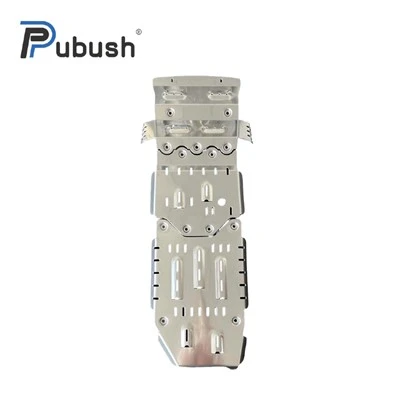
If you’re looking to upgrade your current skid plate, or you have questions about maintenance for your specific plate set, feel free to reach out to our team to discuss your needs. We’re here to help you find the right solution and keep your undercarriage protected for years to come.
Suspension Systems By Model References
- Society of Automotive Engineers (SAE) International. (2021). Vehicle Underbody Protection Systems: Durability and Maintenance Guidelines. SAE International Journal of Passenger Cars – Mechanical Systems, 14(3), 1245-1252.
- National Highway Traffic Safety Administration (NHTSA). (2020). Vehicle Underbody Component Damage and Corrosion: Maintenance Best Practices. NHTSA Technical Report DOT HS 812 897.
- Off-Road Industry Association (ORIA). (2019). Skid Plate Care and Maintenance for Recreational Off-Highway Vehicles (ROVs) and Light Trucks. ORIA Best Practice Guide.
- Aluminum Association. (2018). Aluminum Skid Plate Care: Corrosion Prevention and Damage Assessment Guidelines. Aluminum Association Technical Bulletin AL-2018-04.
Xingtai Refined Machinery and Auto Accessory Co., Ltd.
Xingtai Refined Machinery and Auto Accessory Co., Ltd. is one of the most professional skid plate manufacturers and suppliers in China, featured by quality products and low price. Please rest assured to wholesale durable skid plate made in China here from our factory. Customized orders are welcome.
Address: XINGTAI REFINED MACHINERY AND AUTO ACCESSORY CO., LTD507 NORTH TAIHANG ROAD, XINGTAI CITY, HEBEI PROVINCE, PR.
E-mail: lindy@rfauto.biz
WebSite: https://www.pubush-suspension.com/
