If you’ve ever walked through a machine shop, you know an auto boring machine isn’t just a big metal box that spits out precise parts. It’s a system—one where every small component, every tiny accessory, makes the difference between a part that fits perfectly into an engine block and one that gets rejected on quality control. As a supplier who’s worked with auto boring machines for 12 years, I’ve seen first-hand what happens when a shop cuts corners on accessories: a $50,000 machine sitting idle because they skipped a $200 tool, or a $10,000 cylinder head coming back scratched because they used the wrong workholding. Today, I want to break down exactly what accessories you can’t ignore, why each one matters, and how to pick the right ones for your specific operation. Let’s start with the core of every auto boring setup: the tooling that actually does the cutting. Auto Boring Machine
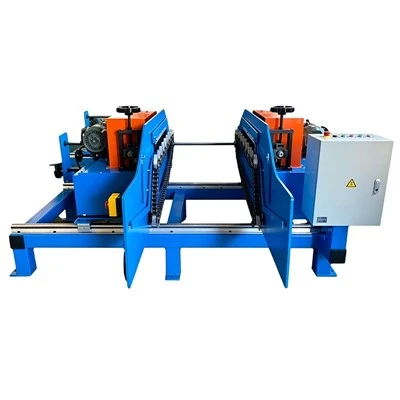
Auto boring machines are designed to bore cylinders, crankshaft bores, and valve seats, all with tolerances tight enough to hold within 0.001 inches. Generic drill bits won’t cut it here—you need tooling made specifically for boring applications. The first non-negotiable accessory is the set of precision boring inserts. These aren’t your standard carbide inserts; they’re indexable, shaped to cut cleanly through cast iron, aluminum, or even ductile steel, the most common materials for automotive parts. I’ve seen shops buy cheap, unbranded inserts to save a few bucks, only to have them chip mid-cut, ruining a $800 cylinder liner and delaying a job for three days. Reputable inserts come with a defined nose radius and edge preparation—something a seasoned machinist can feel, not just read about. For example, when boring a cast iron engine block, a CBN (cubic boron nitride) insert will last 10 times longer than a standard carbide one, even though the initial cost is 30% higher. The savings in downtime and rework add up fast.
Alongside the inserts, you need a precision boring bar. This is the long, rigid shaft that holds the insert, and its rigidity determines how straight and round the final bore will be. A flimsy boring bar will vibrate during cuts, leaving a wavy surface that makes the piston fit poorly, leading to blow-by and engine failure. Most auto boring machines come with a basic boring bar, but if you’re working on larger cylinders (like those in semi-trucks or heavy equipment), you’ll need an extended-length bar. The key here is to match the bar’s diameter to the machine’s spindle size—too small, and it flexes; too big, and it won’t fit the boring head. I always advise customers to go with a bar made from tempered tool steel, not mild steel, because mild steel flexes even under light cuts. Another often-overlooked tooling accessory is the boring head itself. This is the part that adjusts to set the exact bore diameter, and it needs to be calibrated regularly. A cheap boring head might drift by 0.002 inches after 50 cuts, which is enough to make a part scrap. Look for a head with a fine-adjustment screw—one that lets you move the insert in 0.0001-inch increments. That level of precision isn’t a luxury; it’s required for OEM (original equipment manufacturer) parts, where tolerances are non-negotiable.
Moving from cutting tools to the parts that hold your workpiece in place: workholding accessories. If your part isn’t clamped perfectly, even the best tooling will waste your time. Workholding for auto boring machines has two main jobs: keep the part from moving during the cut, and align it so the bore is straight and centered. The most common workholding accessory for cylinder boring is adjustable jaw chucks. These aren’t the generic 3-jaw chucks for lathes; they’re precision-machined to fit cylinder blocks or crankshafts, with removable jaws that can be swapped for different part sizes. For example, a jaw set for a 4-cylinder car block won’t work for an 8-cylinder truck engine, so having interchangeable jaw inserts is a must. What many shops don’t realize is that they need workholding stops too. Stops align the part along the machine’s axis, so you don’t end up with a bore that’s tilted. I once worked with a shop that skipped buying adjustable stops, and they had 12 blocks rejected because the bores were off-center by 0.005 inches. Adjustment stops cost less than $100, but a single rejected engine block can cost $1,500 in materials and labor.
Another workholding accessory often missed is soft jaws. These are custom-machined jaws that fit snugly around the part, instead of generic hard jaws that might leave marks or slip. Soft jaws are made from a soft aluminum or steel blank that you machine yourself to match the part’s shape before clamping. For boring valve seats, where the valve guide is a small, delicate hole, soft jaws prevent distortion—something hard jaws can cause when clamping down on thin parts. For shops that do a lot of custom engine builds, quick-change workholding adapters are also worth the investment. These adapters let you swap out jaw sets in minutes, instead of re-clamping and calibrating for hours every time you switch between jobs. I had a customer who used to take two hours to change over from a 4-cylinder to a V8 setup; after adding quick adapters, that time dropped to 10 minutes, letting them take on three more jobs a week.
Next, let’s talk about measuring and inspection accessories—because if you can’t check the bore, you can’t prove it’s correct. Auto boring machines are precise, but tool wear, temperature changes, and machine drift can throw off a part over time. You need tools to verify every cut, and not just a basic tape measure. The first essential measuring tool is a dial bore gauge. This is a hand-held tool that you insert into the bore, and it measures the diameter to within 0.0001 inches. Cheap bore gauges will drift or give inconsistent readings, especially if they’re dropped. Look for a gauge with a hardened steel anvils and a shock-proof dial—you’ll drop it a time or two, and you want it to keep working. For large bores, like those in semi-truck or marine engines, a telescoping gauge paired with a micrometer is a better choice. Telescoping gauges collapse to fit into big holes, then expand to match the diameter, and you measure the gap with an outside micrometer. It’s a slightly slower process than a dial bore gauge, but it’s more accurate for bores over 6 inches in diameter.
Another critical measuring accessory is a gauge block set. Gauge blocks are tiny, precision-machined metal blocks of exact sizes, used to calibrate your bore gauge and micrometer. Over time, these tools wear out, and their readings drift—especially if you use them every day. Calibrating with gauge blocks once a week ensures your measurements are accurate. I recommend a set of 81 blocks, which covers all common measurements from 0.0001 inches up to 4 inches, enough for almost all automotive boring jobs. For shops that do high-volume production, an electronic bore gauge is a game-changer. These gauges connect to a computer, so you can log every measurement automatically, track tool wear over time, and even generate quality control reports. For example, if you notice that your boring inserts are wearing faster than usual, you can check the bore measurements from the last 100 cuts and swap the inserts before you get a bad part. This reduces scrap rates by 15-20% for most high-volume shops, according to data I’ve collected from customers over the years.
Now, let’s move to support accessories—things that keep your machine running smoothly, reduce downtime, and extend its lifespan. One of the most underrated accessories for auto boring machines is a coolant system upgrade. The standard coolant that comes with most machines is a basic flood system, but for boring, you need coolant that’s delivered directly to the cutting edge to reduce heat and flush away metal shavings. When you bore a cylinder, the insert generates a lot of friction, and heat makes the insert wear faster, and also causes the workpiece to expand, throwing off measurements. A high-pressure coolant system (often called through-tool coolant) pumps coolant through the boring bar, right to the insert’s cutting edge. This reduces insert wear by up to 50%, and keeps the part at a consistent temperature, so your measurements stay accurate. I had a customer who was having to replace inserts every 50 cuts on a 500-horsepower V8; after adding through-tool coolant, they get 120 cuts per insert, cutting their tooling costs in half.
Another support accessory is a chip conveyor. Boring produces a lot of metal shavings—fine cast iron chips, thick steel chips, aluminum shavings that can clog your machine’s coolant lines. If chips build up in the spindle or the work area, they can scratch parts, damage tooling, or even jam the machine. A chip conveyor automatically removes chips as you work, so you don’t have to stop every hour to clean the machine. There are different types of conveyors: belt conveyors for light aluminum chips, scraper conveyors for heavy steel chips, and magnetic conveyors for fine iron chips. Match the conveyor to the materials you work with; if you do a lot of cast iron work, a magnetic conveyor will pull out the tiny iron chips that other conveyors miss. For shops in dusty or high-humidity areas, a spindle lubrication system is also essential. The machine’s spindle is the heart of the auto boring machine, and it needs regular lubrication to run smoothly and avoid premature wear. Most machines have basic lubrication systems, but an automatic lubricator that runs every 15 minutes, instead of manual greasing, reduces human error and ensures the spindle is always properly lubricated.
Finally, safety accessories—because no job is worth risking injury or damaging your machine. Auto boring machines have sharp tooling and heavy workpieces, so you can’t skimp on safety. The first safety accessory is a machine guarding kit. This includes covers for the work area, interlocks that stop the machine if the cover is opened, and shields to keep chips and coolant from spraying out. I’ve seen shops skip guarding to save money, and a chip hit a worker in the eye once—something that could have been prevented with a $300 shield. Another important safety accessory is personal protective equipment (PPE) for your operators, specifically face shields, cut-resistant gloves, and hearing protection. Auto boring machines are loud (up to 90 decibels), so hearing protection is non-negotiable to prevent long-term damage. For handling heavy workpieces, like cylinder blocks that weigh 50+ pounds, a part handling crane or a magnetic lifter is a must. Lifting a 100-pound engine block by hand can cause back injuries, and a crane costs a fraction of what a worker’s compensation claim would cost.
Let’s wrap this up by putting it all together. The accessories for an auto boring machine aren’t random add-ons—they’re the components that turn a functional machine into a productive, precise tool. Tooling (inserts, boring bars, boring heads) ensures your cuts are accurate and long-lasting. Workholding (adjustable chucks, soft jaws, stops) keeps your part aligned and secure. Measuring tools (dial bore gauges, gauge blocks) verify every cut and prevent scrap. Support accessories (coolant systems, chip conveyors) reduce downtime and extend your machine’s life. Safety accessories protect your team and your investment.
If you’re outfitting a new auto boring machine or looking to upgrade your current setup, don’t make the mistake of buying the cheapest accessories you can find. I’ve worked with shops that spent $100,000 on a machine then cut corners on $5,000 in accessories, only to see their production slow down, scrap rates go up, and their machines wear out years early. The right accessories pay for themselves in faster production, less scrap, lower tooling costs, and a safer work environment.
If you’re ready to upgrade your auto boring setup and want guidance on choosing the right accessories for your specific operations, don’t hesitate to reach out for a consultation. We work with shops of all sizes, from small custom engine builders to large production lines, and we’ll help you pick accessories that fit your budget and your needs.
References
Belt Sander With Long Handle Machinery’s Handbook: The Boring, Drilling, and Milling of Metals, Industrial Press, 2022.
Automotive Machining Operations: A Guide for Precision Part Manufacturing, Society of Automotive Engineers, 2021.
Cutting Tool Technology for High-Precision Machining, ASME Press, 2020.
Tongcheng Shengfeng Machinery Factory
As one of the most professional auto boring machine manufacturers and suppliers in China, we’re featured by quality products and good service. Please rest assured to buy durable auto boring machine for sale here from our factory. Contact us for more details.
Address: Shapu Village, Qingcao Town, Tongcheng City, Anhui Province
E-mail: 15955686317@163.com
WebSite: https://www.shengfengmachine.com/
