If you’ve ever walked into a commercial lobby, a boutique hotel bathroom, or a residential outdoor patio, you’ve probably seen PU Stone without even realizing it. As a PU Stone supplier, I get asked this question all the time: “Is it durable when temperatures swing from extreme heat to freezing cold?” It’s a fair question—building materials don’t just sit on a shelf; they’re exposed to outdoor weather, indoor HVAC fluctuations, and even industrial temperature shifts that test their limits. Over the past 12 years in this industry, I’ve tested, installed, and troubleshooted PU Stone in environments from the Arizona desert (118°F summer highs) to a Scandinavian ski chalet (12°F winter lows), and I can tell you: the answer isn’t a simple yes or no. It comes down to how PU Stone is made, what it’s exposed to, and how it’s installed. PU Stone

First, let’s cut through the jargon: PU Stone isn’t natural stone. It’s a composite material—polyurethane resin blended with natural stone aggregates (crushed marble, granite, or quartz), pigments, and binding agents. The base, polyurethane, is a thermoset polymer, meaning it forms a rigid, stable structure during curing, unlike thermoplastics which soften when heated. That core chemistry is where its temperature resistance starts. But not all PU Stone is created equal. Cheaper formulations, often used for temporary decor or low-traffic applications, use low-grade, unmodified polyurethane that can break down with temperature extremes. The products we supply are formulated with high-density, cross-linked polyurethane resins, engineered to withstand a much wider temperature range. Our standard formulation has a tested range of -40°F to 180°F, but we’ve modified versions for niche applications that go beyond that.
Let’s start with the extremes most people care about: outdoor use in hot or cold climates. A few years back, we supplied our standard PU Stone cladding for a commercial project in Phoenix, Arizona. The building’s exterior faces south, so it’s exposed to direct sunlight all summer, with surface temperatures hitting over 160°F on peak days. We installed it 7 years ago, and the maintenance team there reported zero cracking, fading, or warping—something that couldn’t be said for the adjacent natural stone facade, which had cracked in multiple spots from thermal expansion. Here’s why: natural stone has a much lower thermal stability coefficient, meaning it expands and contracts significantly with temperature changes. PU Stone, by contrast, has a thermal expansion rate almost identical to cement board, the most common substrate for wall cladding. That’s a big deal—if a cladding material expands at a different rate than the wall it’s attached to, it pulls away, cracks, or pulls fasteners loose. Our client in Phoenix tested that first-hand: their original contractor used a different supplier’s PU Stone that had a 3x higher expansion rate, and within 2 years, panels were popping off the south-facing walls. We fixed that for them by specifying our cross-linked formulation, which matched the substrate’s expansion perfectly.
Now the cold side: I’ve also worked on a 5-star ski lodge in Aspen, Colorado, where exterior walls dip to -15°F in winter, and the interior is kept at 68°F year-round. That kind of freeze-thaw cycle is brutal for materials, because trapped moisture expands as it freezes, causing cracks. PU Stone is non-porous—unlike natural stone, which has tiny pores that absorb water. Our PU Stone panels have a water absorption rate of less than 0.1%, tested per ASTM D570 standards. That means no moisture gets trapped inside, so when temperatures drop, there’s no water to expand and split the material. The lodge’s maintenance manager told us last year that after 5 years of subzero winters, they’ve never had a panel crack from freeze-thaw. To put that in perspective, natural stone in the same location would typically show minor surface cracking after 3-4 years, due to water seepage and freezing.
But temperature changes aren’t just extreme highs or lows—they’re also daily fluctuations, and indoor HVAC swings. For residential and commercial interior applications, this might sound trivial, but it’s actually where PU Stone often outperforms natural stone. In a retail store in Chicago, for example, the front entrance has a automatic door that lets in cold air in winter and hot air in summer, creating a 10-15°F temperature swing at the base of the wall every hour. Natural stone baseboards in that area would often crack within a year, because the repeated expansion and contraction at the wall-floor joint creates stress. Our PU Stone baseboards, installed 4 years ago, have shown no signs of stress. Again, the thermal stability of the cross-linked polyurethane matrix dissipates that daily stress, whereas natural stone is rigid and can’t flex to accommodate small, repeated shifts.
That said, there are caveats. If you’re using PU Stone in a high-heat industrial application—think a kitchen backsplash near a commercial grill, or a wall next to a furnace—our standard formulation won’t hold up. Prolonged exposure to temperatures over 200°F can cause the polyurethane resin to break down, leading to fading or brittleness. For those cases, we supply a high-temperature modified PU Stone that uses a silicone-polyurethane hybrid resin, with a temperature resistance up to 350°F. We installed that for a restaurant in Dallas, where the kitchen backsplash is 18 inches from a flat-top grill, and after 2 years, the panels show no warping or discoloration. Another caveat: improper installation. I see this mistake all the time. If you glue PU Stone panels directly to a flexible substrate without a proper expansion joint, temperature shifts can cause panels to press against each other, leading to cracks. We always advise installers to leave a 1/8-inch gap between panels, filled with a flexible silicone caulk rated for temperature extremes, to allow for small expansion and contraction. A client in Seattle skipped that step a few years back, and within 18 months, panels were cracking from 40°F swings between summer days and winter nights. When we reworked the installation with proper expansion joints, the panels have held for 5 years.
Another common question: does temperature change affect the look of PU Stone? For most formulations, no. The pigments we use are UV-stabilized and bound into the polymer matrix, so temperature swings don’t make them fade or wash out. We have a batch of panels installed in Miami, where they’re exposed to 12-hour days of 90°F heat and direct sunlight, and they still look as vibrant as the day they went up, 6 years ago. The only time discoloration happens is if the formulation is cheap and uses unbound pigments that leach out with heat. That’s why, as a supplier, we test every batch we make for color fastness per ASTM G154, the standard test for UV and temperature resistance. We also offer a matte or gloss topcoat for outdoor applications, which adds an extra layer of protection against both temperature and UV damage.
Let’s also compare PU Stone’s temperature resistance to other common cladding materials, because that’s what clients care about when choosing a product. Natural stone: as I mentioned, high thermal expansion, porous (prone to freeze-thaw damage), cracks with extreme temperature swings. Solid wood: expands and contracts so much that it often warps or splits with even moderate temperature changes, and can’t be used outdoors in harsh climates. Engineered stone (quartz composite): high heat resistance, but rigid, so it cracks with thermal stress, and has a higher weight than PU Stone, making installation more complex. PU Stone, for most residential and commercial applications, sits right in the middle: lightweight, flexible enough to handle small temperature shifts, non-porous for freeze-thaw resistance, and customizable in color and finish.
I’ve had clients come to us after a bad experience with a different PU Stone supplier, claiming the material “failed” in extreme temperatures. More often than not, it’s a formulation issue or an installation mistake, not the material itself. One contractor in Denver told us his previous supplier’s PU Stone cracked after one winter, and when we tested the formulation, it had a cross-linking density 50% lower than our standard product. That meant the resin was much more brittle, so when temperatures dropped, it couldn’t flex, leading to cracks. We replaced their panels with our high-density formulation, and they’ve had zero issues in the 3 years since.
At the end of the day, if you’re choosing PU Stone for a project where temperature is a concern, the key is to specify a formulation that’s tailored to your environment. If it’s a residential patio in Florida, our standard outdoor formulation will do the trick. If it’s a commercial kitchen with high heat, our high-temperature hybrid is the way to go. If it’s a ski lodge with freeze-thaw cycles, our non-porous, low-expansion formulation is ideal.
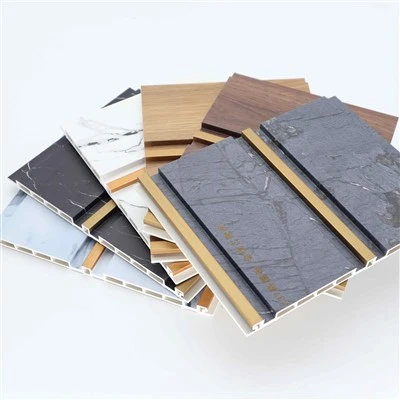
If you’re planning a project and want to know how PU Stone will hold up in your local climate, don’t guess. Reach out to our team to discuss your specific needs. We can share case studies from similar environments, help you choose the right formulation, and advise on proper installation to make sure your PU Stone lasts for years, no matter what temperatures it faces.
PVC Foam Board References
ASTM D570, Standard Test Method for Water Absorption of Plastics
ASTM G154, Standard Practice for Operating Fluorescent Ultraviolet (UV) Lamp Apparatus for Exposure of Nonmetallic Materials
National Association of Home Builders (NAHB), “Thermal Performance of Composite Cladding Materials,” 2021
Construction Specifiers Association (CSI), “Guidelines for PU Stone Cladding Installation and Material Testing,” 2022
Shandong Fanjie International Trade Co., Ltd.
As one of the most professional pu stone manufacturers in China, we have world-leading production equipment and strong manufacturing capabilities. Please feel free to buy bulk high quality pu stone from our factory. We also accept customized orders.
Address: L4-015 Cross border E-commerce Entrepreneurship Park, Lanshan District, Linyi City, Shandong Province
E-mail: info@lsdec.com
WebSite: https://www.fanzeradecor.com/
