If you’re in industrial fluid power, construction equipment, or manufacturing, odds are you’ve crossed paths with a KYB piston pump at some point. But for anyone new to the space—whether you’re a small business owner sourcing parts for a new excavator, a maintenance tech troubleshooting a leaking hydraulic system, or an engineer designing a custom production line—wrapping your head around exactly what a KYB piston pump is, why it’s so widely used, and what sets it apart from other hydraulic pumps can feel like sifting through half-remembered industry jargon. I’ve been a KYB pump supplier for 12 years now, and I’ve talked hundreds of buyers through this exact question, so let’s break it down like I would over a coffee at my warehouse loading dock. No stuffy textbook language, no overpromising hype—just the straight facts about a product that powers everything from skid steers to garbage trucks. KYB Pump
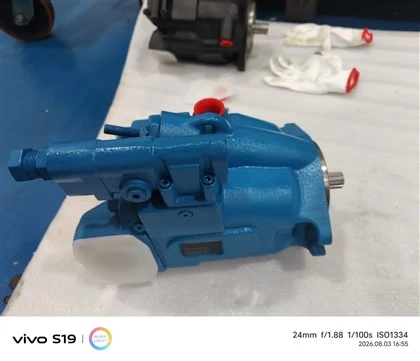
First, let’s start with the basics: what’s a piston pump, in general? At its core, a piston pump is a type of positive displacement pump, meaning it moves a fixed, precise volume of fluid every time a piston inside the pump moves. That’s different from, say, a gear pump, which uses rotating interlocking gears to push fluid, or a vane pump, which relies on sliding vanes inside a rotor. Piston pumps use one or more cylindrical pistons that move back and forth inside a machined cylinder block. As the piston pulls away, it creates a vacuum that pulls hydraulic fluid into the cylinder; as it pushes forward, it forces that fluid out under high pressure. It’s simple mechanics, but the precision is what makes it powerful.
Now, KYB isn’t just any piston pump brand. KYB is short for Kayaba Industrial Co., a Japanese company founded back in 1919. For most of their early history, they focused on shock absorbers—you’ve probably seen their name on aftermarket car parts at an auto shop. But in the 1950s, they pivoted into hydraulic systems, and by the 1970s, they’d carved out a reputation for manufacturing piston pumps that outlasted just about anything else on the market for heavy-duty applications. Today, they’re one of the top three hydraulic pump and system suppliers in the world, if not the top, and their piston pumps are standard equipment on most major construction, agricultural, and industrial equipment brands.
So what makes a KYB piston pump different from a generic piston pump you can buy off a discount parts site? For starters, it’s in the engineering. Generic piston pumps often cut corners on material quality, using cheaper cast iron or even aluminum that wears down fast under continuous high pressure. KYB uses advanced alloy steels and precision machining that tolerates pressure spikes up to 5,000 psi—some of their heavy-duty models handle even more. That matters because for construction equipment, if your pump fails mid-dig, you’re not just out a $500 part; you’re looking at days of downtime, thousands in lost revenue, and potentially missed project deadlines. I had a customer a few years back who ran a small excavation company in Ohio; he bought a cheap aftermarket piston pump for his excavator to save $200, and it burned out after 100 hours of operation. A KYB pump for that same model would have lasted 2,000+ hours with regular maintenance. The math adds up fast.
Another key feature of KYB piston pumps is their efficiency. Hydraulic systems are only as good as their ability to move power without wasting energy. A good piston pump converts almost all of its engine power into hydraulic fluid flow, while a bad one bleeds off power as heat, which not only wastes fuel but also breaks down the hydraulic fluid faster. KYB designs their pumps with matched clearance tolerances between the pistons, cylinder block, and valve plate that minimize internal leakage. Their swash plate piston pumps—their most popular line—let you adjust the angle of the swash plate, which changes the volume of fluid the pump moves per revolution. That’s critical for variable-load equipment: if you’re digging a deep trench, you need maximum flow and pressure; if you’re just moving the bucket an inch off the ground, you can dial the pump back to save fuel. Generic pumps usually only offer fixed displacement, so you’re wasting energy when you don’t need full power.
Let’s talk about the most common types of KYB piston pumps you’ll encounter, because not all KYB piston pumps are the same. First, swash plate axial piston pumps—this is the workhorse of the line, used in almost every compact excavator, skid steer, and small agricultural tractor I’ve supplied pumps for. These have a set of pistons arranged in a circle inside a rotating cylinder block, all pushing against a tilted swash plate. The cylinder block spins, pushing the pistons in and out, and the tilt of the swash controls the flow. KYB’s PSVD and PSV series are the go-to models here. I’ve sold PSVD-27 pumps for Takeuchi excavators and PSV-52 pumps for John Deere skid steers; both have a track record of holding up in harsh conditions.
Then there’s bent axis piston pumps, which are used in larger equipment—think 10-ton excavators, forestry equipment, and mining trucks. Bent axis pumps have pistons arranged around a bent drive shaft, which lets them handle even higher pressures (up to 6,000 psi) than swash plate pumps. They’re bulkier, more expensive, but they’re built for continuous, heavy-duty use where downtime isn’t an option. KYB’s A series of bent axis pumps is used by Caterpillar, Komatsu, and other major heavy equipment brands, so you know they’re built to specs that match the equipment they’re installed in. That’s another big selling point of KYB parts: they’re OEM-compliant, meaning they fit exactly where the original part does, with no modifications needed. No machining, no custom fittings—just swap it out, bleed the lines, and get back to work.
Now, let’s clear up a common misconception: a lot of people call any hydraulic pump a “KYB pump,” but that’s not accurate. KYB only manufactures a specific line of piston pumps, gear pumps, and hydraulic systems. You won’t find a KYB water pump or a KYB fuel pump—their focus is 100% on hydraulic components for heavy industry. And while they do make parts for aftermarket sales, most of their volume is original equipment for new machinery, which is why quality control is so tight. Every KYB piston pump goes through three pressure tests before it leaves the factory, checking for leaks, flow rate, and pressure tolerance. I’ve had customers send me used pumps to refurbish, and even pumps that have been in service for 10 years show less wear than a new generic pump I sold them last year.
As a supplier, the biggest thing I want buyers to know about KYB piston pumps is that they’re not just a part—they’re an investment. I’ve worked with hundreds of customers over the years, and I can count on one hand the people who’ve called me to complain about a KYB piston pump failing prematurely. Most of the issues I deal with are from people who installed the wrong pump, used low-quality hydraulic fluid, or skipped routine maintenance. A KYB pump will last for years if you follow the basic rules: change the hydraulic fluid and filter every 1,000 hours, use the correct viscosity fluid for your equipment’s operating temperature, and don’t let the pump run dry or operate at maximum pressure for extended periods.
Now, if you’re reading this and you’re in the market for a KYB piston pump, here’s what you need to know to get the right part. First, check your equipment’s model number and serial number. KYB publishes OEM part numbers for every pump they make for every major equipment brand, so matching that number is the fastest way to get a pump that fits perfectly. If you don’t have the part number, send me a photo of the old pump and the equipment’s model, and I can cross-reference it. Second, decide what kind of duty you need. If you have a compact excavator used for residential digging or landscaping, a swash plate axial piston pump will be more than enough, and more cost-effective than a bent axis pump. If you’re running a large mining truck that operates 24/7, a bent axis pump is worth the extra cost for the durability. Third, don’t skimp on fluid. I see way too many people use cheap hydraulic fluid to save money, and that’s the number one cause of premature pump failure. KYB specifies certain fluid types and change intervals, and following that will double the life of your pump.
I started this business because I saw how many small operators get burned by cheap, no-name parts that end up costing them more in downtime. I specialize in genuine KYB piston pumps, not knockoffs or reconditioned parts. Every pump I sell comes with a 12-month warranty, and I have a team of techs who can help you troubleshoot any issues, whether you’re trying to identify the right part or fix a problem that comes up after installation. Last month, I worked with a customer in Texas who had a KYB pump for a boom lift that was making a strange noise; he sent me a video, and I walked him through checking the inlet strainer, which was clogged with metal shavings from a worn valve. We fixed it for less than $100, and he avoided having to replace a $3,000 pump. That’s the kind of service you don’t get from a big box parts store.
At the end of the day, a piston pump is the heart of any hydraulic system. If your heart’s weak, the whole machine struggles. A KYB piston pump isn’t the cheapest option on the market, but it’s the most reliable for heavy-duty use, and when you factor in the cost of downtime, it’s actually the most cost-effective option for most businesses. I’ve been in this long enough to know that when a customer buys a KYB piston pump from me, they’re not just buying a part—they’re buying peace of mind that their equipment will run when they need it to.

If you’re looking to replace a worn pump for your construction equipment, agricultural machinery, or industrial system, or if you’re building new equipment and need to source genuine KYB piston pumps, I’m here to help. Don’t waste time and money on generic parts that will fail before their time. Reach out to me to discuss your specific needs, get a quote, or ask any questions about KYB piston pumps for your application.
VOLVO Pump References
Kayaba Industrial Co., Ltd. Product Catalog: Hydraulic Pumps & Systems.
Hydraulic Institute. Positive Displacement Pump Application Guidelines.
Equipment World. 2023 Heavy Equipment Component Durability Report: Hydraulic Pumps.
Fujian Zhenyuan Hydraulic Equipment Co., Ltd.
Fujian Zhenyuan Hydraulic Equipment Co., Ltd. is well-known as one of the leading kyb pump manufacturers and suppliers in China. If you’re going to wholesale kyb pump in stock, welcome to get quotation from our factory. All customized products are with high quality and low price.
Address: No. 125, Wuli Industrial Zone, Jinjiang, Quanzhou City, Fujian Province
E-mail: yexun@fjzhenyuan.com
WebSite: https://www.zhenyuanhydraulic.com/
